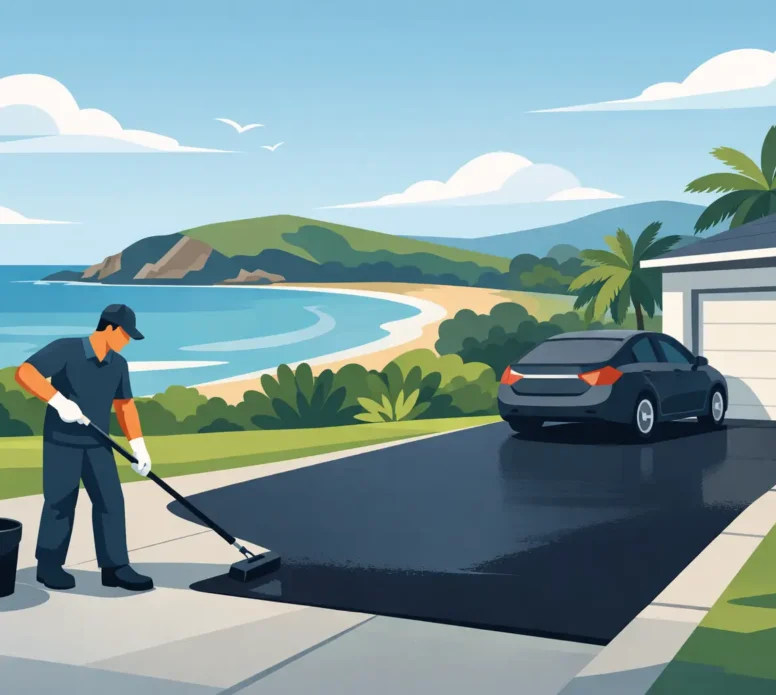
A driveway can make an otherwise well-kept property look tired long before the house itself does. Faded concrete, oil marks, tyre tracking, flaking coating and weed-filled joints all affect first impressions – and in a coastal area, sun, rain and moisture can accelerate the problem. Quality driveway sealing Coffs Harbour NSW property owners can depend on is not simply a coat rolled over the top. It starts with understanding the surface, preparing it properly and selecting a coating suited to how the driveway is actually used.
For homeowners, landlords and strata managers, sealing is a practical way to improve presentation while helping protect a surface that works hard every day. The right result looks clean and even, but it also has to stand up to vehicles, weather and routine cleaning.
Driveways are exposed to more than most external surfaces. They carry vehicle weight, collect dirt and leaf matter, receive direct UV exposure and are often exposed to runoff from roofs, gardens and nearby paths. On older concrete, these conditions can leave the surface looking patchy and porous. On previously coated driveways, the coating may lose its colour, become chalky or begin to peel where adhesion has failed.
Coffs Harbour’s wet periods and humidity add another consideration. Moisture can encourage mould, algae and slippery growth, particularly on shaded driveways, sloped sections and areas beneath trees. A sealer can make regular maintenance easier, but it will not solve an underlying drainage issue or repair concrete that is moving and cracking. Those concerns need to be identified before work begins.
The goal is not to make every driveway look identical. A newer concrete driveway with light wear may only need thorough preparation and a suitable protective finish. An older surface may require stain treatment, crack attention, coating removal or more extensive restoration first. This is why an on-site assessment is more useful than choosing a product based on a photo alone.
A lasting finish is built in stages. Skipping preparation may save time at the start, but it often leads to peeling, uneven colour or marks showing through later. A professional driveway sealing project generally begins with a close look at the concrete, existing coatings, contamination, drainage and surrounding areas.
Pressure cleaning removes loose dirt, built-up grime, cobwebs and much of the surface growth that makes concrete look dull. However, cleaning must be matched to the condition of the driveway. Oil and grease can need specific treatment, as they may prevent a new coating from bonding correctly. Rust marks, tyre residue and stubborn organic staining may also need separate attention.
The surface then needs enough time to dry. Applying a coating to damp concrete can trap moisture and compromise adhesion. Weather conditions matter here, particularly after sustained rain or where a driveway remains shaded for much of the day.
Fine surface cracks, small holes and damaged edges can often be repaired as part of the preparation process. Larger cracks need a more cautious approach. If they are caused by movement in the slab or poor drainage beneath it, simply filling and coating over them may only hide the issue temporarily.
Loose or failing existing coatings must also be removed or stabilised. A new coating is only as dependable as the surface below it. Applying fresh material over peeling paint may improve the appearance briefly, but the weak layer can continue to fail underneath.
Edges, adjoining paths, garage doors, garden beds and walls should be protected before coating starts. This attention to detail helps keep the worksite tidy and gives the finished driveway a clean, well-defined look.
Not every driveway needs the same system. Concrete age, texture, previous treatments, vehicle traffic, slope and sun exposure all influence the best approach. A coating that looks good on a lightly used level driveway may not be the right choice for a steep entry that becomes slippery when wet or a high-traffic strata area.
Colour also deserves some thought. Mid-tone colours often hide dust and tyre marks better than very light finishes, while darker surfaces can become noticeably hotter in full sun. The existing exterior colour scheme, roof, fencing and paths can help guide a choice that feels considered rather than added as an afterthought.
For driveways with a gradient, frequent shade or regular wet conditions, slip resistance should be part of the discussion. Texture can improve footing, although a more textured surface may hold more dirt and require more careful cleaning. It is a worthwhile trade-off when safety is the priority.
Driveway sealing is most effective when the slab is generally sound but looks weathered, stained or unprotected. It can refresh faded concrete, improve colour consistency and create a surface that is easier to wash down. For a property being prepared for sale, a refreshed driveway can also improve the approach to the home without changing the structure itself.
There are situations where sealing should wait. Significant cracking, sinking, ponding water, crumbling concrete and drainage problems need to be investigated first. A coating is a protective finish, not a structural repair. Treating the visible surface without addressing water flow or slab movement can lead to disappointment and further maintenance.
The same principle applies to mould and algae. If heavy shade, leaking gutters or poor drainage keeps a section wet, the growth is likely to return. Cleaning and sealing can improve the result, but reducing the source of ongoing moisture is the better long-term fix.
Dry, stable weather gives a driveway coating the best chance to cure as intended. That does not mean every project needs a long run of hot weather. Very high temperatures can affect how quickly some products dry, while rain or heavy dew too soon after application can interfere with the finish.
A contractor should consider the forecast, surface moisture, shade patterns and the time needed before vehicles can return to the driveway. Planning matters for households with limited parking, as well as unit complexes and commercial properties where access needs to be coordinated carefully.
For larger sites, work can sometimes be staged to keep part of an entry available. The practical details are just as important as the coating itself: where residents will park, how bins will be accessed, how foot traffic will be managed and when the area can safely return to use.
Once a driveway has cured, gentle routine care helps keep it looking its best. Sweep away leaves and loose dirt before they break down and stain the surface. Wash off mud, bird droppings, fertiliser spills and vehicle leaks promptly where possible. Regular light cleaning is easier on the coating than leaving grime to build up for months.
Avoid harsh cleaning methods unless they are appropriate for the coating system. High-pressure cleaning held too close to the surface can damage some finishes, especially around edges or areas already showing wear. Use a sensible pressure setting and ask for maintenance advice specific to the completed surface.
It is also wise to keep an eye on drainage. Clear nearby gutters and drains, and avoid directing constant water flow onto the same section of driveway. If small chips, worn traffic areas or fresh cracks appear, dealing with them early usually produces a neater and more manageable repair.
A driveway should complement the rest of the property, not become another maintenance concern. That means being realistic about the condition of the concrete, the likely preparation required and the finish that suits the site. Harbour Painting Solutions approaches driveway work with the same care given to other exterior surfaces: clear communication, thorough preparation and respect for the property while work is underway.
Whether the aim is to refresh a home’s street appeal, improve a shared entry or protect a hard-working commercial surface, the best next step is a proper inspection rather than a quick cover-up. A well-prepared, appropriately sealed driveway can give the property a cleaner arrival point and make everyday upkeep feel far more manageable.