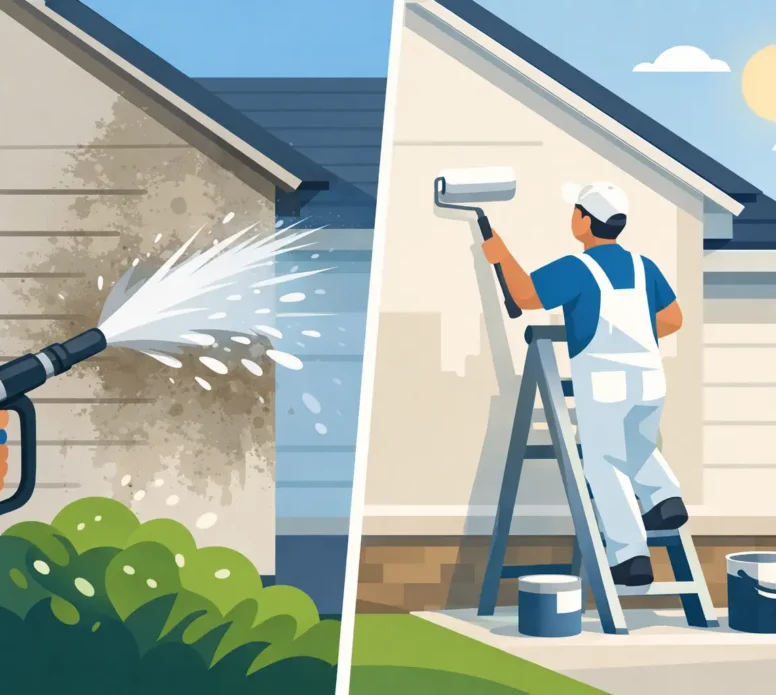
A fresh exterior paint job can look excellent on day one, then start peeling far sooner than it should. Often, the issue is not the paint itself. It is what was left beneath it. Pressure cleaning before painting is one of the most valuable preparation steps for many exterior surfaces, particularly on homes exposed to Coffs Harbour’s coastal air, rain, humidity and summer heat.
Cleaning is not simply about making a wall look tidy before the painters arrive. It removes the layers that can stop a coating from bonding properly: salt, chalky old paint, dust, cobwebs, mould spores, algae and general airborne grime. When the surface is clean, sound and dry, the new paint has the best chance of doing its job – protecting the property as well as improving its appearance.
Paint needs a stable surface to adhere to. If grime or salt is sitting on weatherboards, masonry, eaves, rendered walls or metalwork, a new coating may stick to that contamination rather than the surface itself. The result can be patchy adhesion, blistering, early flaking or paint that simply does not wear as expected.
Coastal properties need particular attention. Salt can settle on exterior surfaces even when it is not obvious to the eye. Add moisture and humidity, and mould or algae can take hold in shaded areas around eaves, verandahs, fences and southern-facing walls. Painting over these issues may hide them briefly, but it does not address the cause or provide a reliable base for the coating system.
A properly cleaned surface also gives your painter a clearer view of its true condition. Once dirt and loose material are removed, cracks, failed caulking, damaged timber, rust spots and deteriorating paint are much easier to identify and repair. That is why preparation should be treated as part of the painting work, not an optional extra.
Pressure cleaning is highly effective for lifting surface contaminants from suitable exterior materials. It can remove built-up dirt, cobwebs, mud splash, loose and chalking paint, mild surface mould and algae, as well as coastal salt residue. On driveways, paths and some roof surfaces, it can also make a dramatic visual difference before protective work is carried out.
However, high-pressure water is not a cure-all. Deep mould growth may need a specific treatment rather than water pressure alone. Rust must be prepared and treated correctly before painting. Cracked render, rotten timber and failed sealant need repair. If a coating is broadly failing, cleaning may reveal that more extensive scraping, sanding or stripping is required.
The goal is not to blast every surface at maximum pressure. The goal is to create a clean, stable substrate without causing damage.
A hard masonry wall can generally tolerate more pressure than aged weatherboards, soft timber cladding or delicate eaves. Used carelessly, a pressure cleaner can gouge timber, force water behind cladding, damage mortar joints, lift sound paint and drive moisture into areas that need to stay dry.
The nozzle, water pressure, distance from the surface and cleaning product all matter. Experienced preparation work involves adjusting the approach to the material and its condition. A professional will also protect surrounding plants, windows, fixtures and painted areas that are not being treated.
Most exterior repainting projects benefit from some form of washing, but full pressure cleaning is especially useful when the property shows obvious environmental build-up. Consider it where there is visible mould, green algae, salt exposure, dusty or chalky paint, cobwebs around eaves, traffic grime, or years of accumulated dirt on masonry and fences.
It is also a sensible step before painting roofs, exterior rendered walls, brickwork, Colourbond-style metal surfaces, concrete areas and many timber structures, provided each surface is assessed first. For landlords, strata committees and commercial property managers, regular exterior cleaning can support a more planned maintenance programme rather than waiting for surfaces to deteriorate.
There are occasions where a gentler wash is the better option. Fragile old timber, damaged cladding, areas with loose fittings, or surfaces where water could enter the building need careful handling. Interior painting rarely calls for pressure cleaning. Instead, walls are usually washed, spot-treated and sanded as needed.
A common mistake is assuming the job is ready for paint as soon as the wall looks clean. It is cleaner, but it may not yet be paint-ready. Quality preparation follows a sequence, with each stage supporting the next.
First, the surface is assessed for contamination, coating failure and damage. Cleaning removes the build-up and loose material. Once dry, the surface can be inspected properly, then scraped, sanded, patched, sealed or primed where needed. Gaps around trims and joints may require fresh flexible sealant. Bare timber, exposed metal and stained areas may need specific primers so the finish coats perform as intended.
Drying time matters. Painting too soon after washing can trap moisture under the coating, particularly in timber, render and shaded areas. Weather conditions, surface type and ventilation all affect how long the substrate needs. A good painting schedule allows for this rather than treating it as a delay.
Mould is a frequent issue around the Coffs Coast, particularly on shaded elevations and homes surrounded by established trees. Pressure cleaning can remove visible growth, but simply washing it away may not be enough. The surface should be treated appropriately, and the conditions encouraging growth should be considered.
Poor drainage, overhanging vegetation, limited airflow, leaking gutters and persistent shade can all contribute. Addressing these factors where possible helps the cleaned and painted surface stay in better condition. For significant mould, there may also be health and safety considerations that call for specialist handling.
You can, but it is worth weighing the risks against the apparent saving. Domestic pressure cleaners are powerful enough to damage surfaces or force water into openings if they are used too close or at the wrong angle. Ladders, wet ground and high-pressure equipment are also not a forgiving combination.
If you choose to clean a small, accessible area yourself, start with the lowest effective pressure, keep the spray moving and test a discreet section first. Avoid spraying up under weatherboards, directly into vents, around windows or into gaps in cladding. Keep electrical fittings protected, move outdoor furniture and cover nearby garden areas where suitable.
For a full exterior repaint, older homes, multi-storey work, roofs or properties with extensive mould and coating failure, professional preparation is usually the safer and more dependable path. The value is not just in the equipment. It is in knowing what should be cleaned, what should be repaired, and what needs a different treatment altogether.
A paint job may appear fine initially, but poor cleaning often becomes evident after weather exposure. Watch for these warning signs:
These problems are frustrating because repainting is the visible part of the project, while the cause is often hidden underneath. Thorough preparation helps avoid having to revisit the same areas sooner than expected.
For Harbour Painting Solutions, careful surface preparation is part of looking after the whole property, not just applying a new colour. A clean work area, appropriate cleaning method, realistic drying time and close inspection after washing all contribute to a finish that looks sharp and lasts well.
The right paint system matters, but it can only perform as well as the surface beneath it allows. Before choosing colours or booking the final coat, give the exterior the attention it needs: clean it properly, let it dry fully and fix what the wash reveals. That groundwork is where durable results begin.