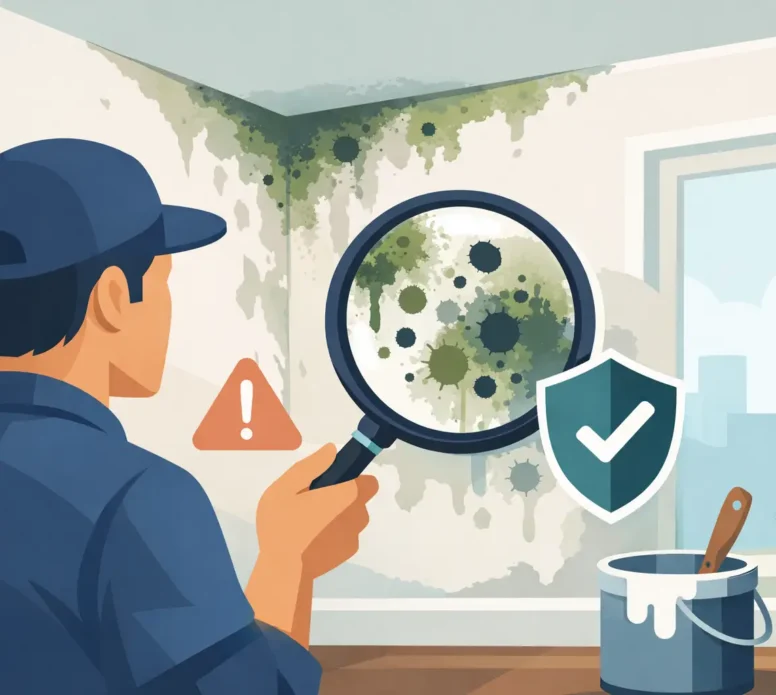
A few dark specks near a bathroom ceiling can look harmless, especially when the paint itself still appears sound. Knowing how to identify paint mould helps you deal with the real cause before a small patch becomes a recurring problem, damaged coating, or a larger surface-restoration job.
For homes, units and commercial properties around the Coffs Coast, moisture is rarely in short supply. Humid weather, shaded walls, coastal air, bathrooms, laundries and poorly ventilated rooms can all create the conditions mould needs. The key is not simply spotting a mark – it is working out whether it is mould, dirt, a water stain, or a paint failure, then choosing the right response.
Paint mould commonly appears as small clusters of black, dark grey, green, brown or occasionally white spots on a painted surface. It may begin as a light freckling, then grow into uneven patches with fuzzy-looking edges. On white ceilings and pale walls, black spotting is often the first sign people notice.
Unlike a clean scuff mark, mould rarely has a tidy shape. It tends to follow the areas where damp air settles or where a surface stays cool and slow to dry. Look closely at ceiling corners, behind furniture against outside walls, around window reveals, near air-conditioning units, inside wardrobes, and along skirting boards.
Mould can also leave a musty odour, particularly in enclosed rooms. You may not always see much growth at first, but a persistent damp smell is worth investigating rather than masking with fragrance or fresh paint.
Bathrooms, laundries and kitchens are obvious starting points because steam and condensation build up there. Check above showers, around exhaust fans, behind washing machines and near sink splashbacks. In bedrooms and living areas, inspect walls hidden behind large cupboards, beds and lounges, especially where furniture is pushed tightly against an external wall.
Outside, mould and algae can develop on painted eaves, soffits, fascias, shaded walls, fences and under covered verandahs. Exterior growth is often greener than indoor mould because it can mix with algae and lichen. It is still a sign that moisture, shade and surface contamination need attention before repainting.
Not every discolouration on a painted wall is mould. Correct identification matters because repainting a water-damaged wall without fixing the leak, for example, only hides the issue for a short time.
A water stain often looks yellow, tan or rusty brown, with a ring or tide mark around its edge. It is usually caused by a leaking roof, pipe, shower recess or window. The paint may blister, soften or peel if moisture is still entering the surface. Mould may grow on or around a water stain, but the stain itself is not proof of mould.
Dirt, smoke residue and cooking grease usually sit on the surface in high-use areas. These marks are more likely to be grey, brown or streaky, and they often wipe away more evenly than mould. Grease is common around cooktops, while smoke residue may collect near fireplaces or on ceilings.
Paint failure can show as cracking, flaking, bubbling, chalking or peeling. Sun exposure, poor preparation, incompatible products and trapped moisture can all cause paint to fail. Mould sometimes grows where coatings have broken down, but the peeling needs its own diagnosis.
Efflorescence is another lookalike, most often found on masonry. It appears as a white, powdery deposit caused by salts moving through brick, concrete or render. It is not mould, although it points to moisture within or behind the surface.
A useful clue is the pattern. Mould spots often reappear in the same damp or poorly ventilated area after cleaning. A stain from a one-off spill should not return once properly cleaned and dried. If marks keep coming back, there is usually a moisture or ventilation issue still at work.
Before touching the area, look for the cause. Is there condensation on windows? Is the exhaust fan running effectively? Has a roof leak appeared after heavy rain? Is a downpipe overflowing onto an external wall? Have wet towels, indoor clothes drying or furniture placement reduced airflow in the room?
For a small, contained patch on a sound painted surface, wear gloves, eye protection and a suitable mask before cleaning. Keep children, pets and people with respiratory sensitivities away from the area while you work. Avoid dry brushing or sanding mould, as this can spread particles through the room.
Use a product designed for mould removal according to its label directions, and allow the surface to dry thoroughly afterwards. Do not mix cleaning chemicals. If cleaning lifts the mark but leaves a shadow, it may be staining beneath the paint or an indication that the coating has absorbed moisture.
Cleaning alone is not a permanent fix if the room stays damp. Run exhaust fans during and after showers, open windows when weather permits, repair leaks promptly and leave a small gap between furniture and cold external walls so air can circulate. In some homes, a dehumidifier can help during extended wet or humid periods.
Small surface growth is one thing. Widespread mould, repeated growth, soft or damaged plasterboard, active leaks and strong odours call for a more careful assessment. The same applies if mould is appearing in several rooms, inside ceiling cavities, under flooring, or on areas that may have been wet for some time.
Professional remediation is particularly worthwhile before a major repaint. Painting over active mould is not a solution. The new coating can discolour, lose adhesion or develop spotting again, leaving the property looking worse and creating unnecessary repeat work.
A proper approach starts with identifying where the moisture is coming from. Depending on the surface, this may involve cleaning and treatment, removing unsound paint, repairing damaged substrate, allowing the area to dry, applying the appropriate sealer or primer, and repainting with a suitable coating system. Exterior surfaces may also need pressure cleaning and preparation to remove mould, algae and loose material safely.
For strata and commercial properties, early action is especially useful. Mould in common corridors, stairwells, shared laundries or exterior walkways can affect presentation and may point to a broader maintenance issue. Clear records of the affected areas, recent weather events and known leaks can help coordinate the next steps with the right trades.
Fresh paint looks its best when the surface beneath it is clean, dry and stable. That is why preparation matters as much as the topcoat. A quality paint system can improve cleanability and durability, but it cannot overcome ongoing water ingress or stale, humid air.
Inside, focus on ventilation and everyday moisture control. Use exhaust fans, keep vents clear, wipe down heavy condensation and avoid drying loads of washing in closed rooms where possible. Outside, keep gutters and downpipes working properly, trim vegetation away from walls where practical, and watch for shaded sections that stay wet after rain.
If you are planning a repaint and have seen spotting or staining, mention it before work begins. It gives the painter an opportunity to inspect the condition of the surface and recommend the right preparation rather than treating mould as an afterthought.
A clean painted surface should make a property feel cared for, not leave you wondering what is growing beneath the coating. When a mark keeps returning, trust that signal: deal with the moisture first, then restore the surface properly.