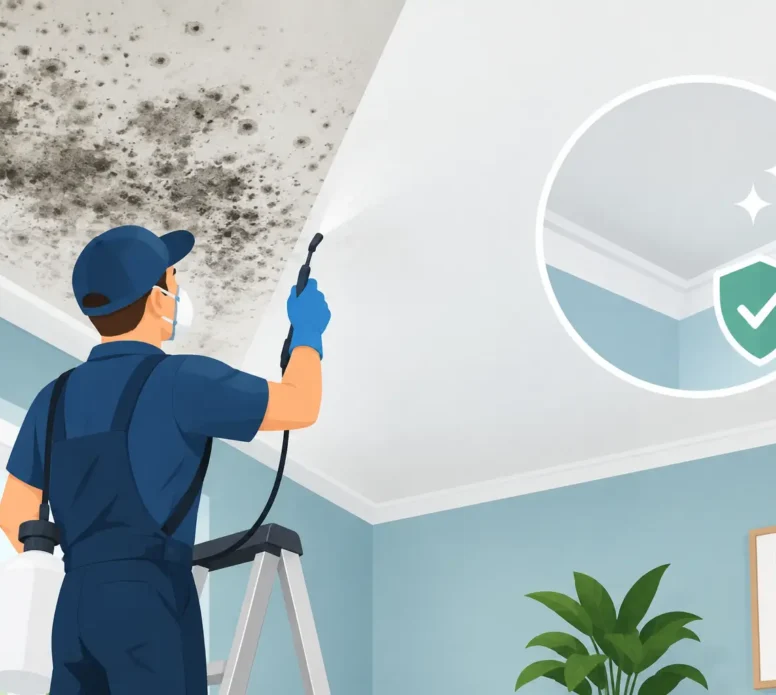
A ceiling spot that keeps returning after a quick wipe is rarely just a cleaning problem. Effective mildew ceiling treatment needs to remove the visible growth, deal with the moisture feeding it and restore the surface with the right preparation and coating. Otherwise, the stain may disappear briefly while the underlying issue continues above your head.
In Coffs Harbour and surrounding coastal areas, warm weather, humid air, shaded rooms and wet-season rainfall can all contribute to ceiling mildew. Bathrooms, laundries, kitchens, bedrooms with limited airflow and ceilings beneath roof spaces are common trouble spots. Acting early protects the appearance of your home and gives you a better chance of avoiding more extensive repairs later.
Mildew and mould need moisture to grow. On a ceiling, that moisture usually comes from one of two places: humid indoor air condensing on a cool surface, or water entering the building through a leak.
Steam from showers is a frequent cause in bathrooms, especially where an exhaust fan is undersized, not vented outside or simply not used for long enough. In bedrooms, closed windows, heavy furnishings against external walls and poor cross-ventilation can allow humid air to settle. Kitchens and laundries create similar conditions when moist air has nowhere to escape.
A brown or yellow mark, peeling paint, a soft ceiling section or a mildew patch that grows larger after rain points to a possible roof, flashing, gutter, plumbing or air-conditioning issue. Cleaning and repainting before that source is fixed is false economy. The new paintwork may look tidy for a short time, but the moisture will continue to affect the ceiling material and coating.
It is also worth remembering that mildew is often used as an everyday term for surface fungal growth. Whether the patch is called mould or mildew, the practical approach is the same: identify the moisture, clean safely, allow the surface to dry thoroughly and use suitable coatings where repainting is needed.
Before reaching for a cleaner, take a close look at the pattern of the marks. Small black specks spread across a bathroom ceiling are more likely to be caused by condensation and poor ventilation. A concentrated stain in one area, particularly near a cornice, light fitting or external wall, may indicate water entry.
Run the bathroom exhaust fan during showers and leave it operating afterwards to clear lingering steam. Open windows where practical, and check that vents are not blocked by dust or paint. In homes that remain closed for much of the day, improving airflow can make a noticeable difference. A dehumidifier may also help in persistently damp rooms, but it should support, not replace, a proper ventilation or repair solution.
If the ceiling stain follows heavy rain, do not assume the roof is the only culprit. Overflowing gutters, damaged flashing, cracked tiles, roof penetrations and leaking pipework can all allow water to travel before it becomes visible indoors. Finding the actual entry point may require inspection by the appropriate trade before any ceiling restoration begins.
A small, isolated patch on a sound, dry ceiling can often be addressed with careful cleaning. Larger areas, recurring growth, strong musty odours, damaged plasterboard or staining around electrical fittings deserve a more cautious response.
For strata properties and rentals, early reporting is especially helpful. Moisture can travel between units, roof spaces and shared building elements, so a visible ceiling patch may not be confined to one room. Clear photos, dates and notes about rain or plumbing events can help a manager or maintenance team organise the right investigation.
Ceilings are awkward to clean because working overhead increases the chance of cleaner splashing into your eyes or dripping onto floors and furnishings. Protect nearby surfaces, keep children and pets away from the work area, and use a stable step ladder rather than balancing on furniture.
For minor surface growth, wear gloves, eye protection and a P2 mask. Ensure the room has good ventilation. Avoid dry brushing or aggressive sanding, as this can disturb spores and spread them through the room. Use a suitable mould-cleaning product or mild detergent solution according to its directions, applying it carefully with a soft cloth or sponge rather than soaking the ceiling.
Bleach is often treated as a universal answer, but it is not always the best choice. It can whiten stains without addressing the moisture source, may damage surrounding finishes and should never be mixed with other cleaning products. A ceiling with porous, chalky or deteriorated paint may need more than washing. If you are uncertain about the surface or the cleaner, professional advice is the safer option.
Once cleaned, the area needs time to dry fully. This step matters. Repainting over a damp ceiling can trap moisture, weaken adhesion and bring stains or fungal growth back through the finish.
A clean-looking ceiling is not automatically ready for paint. Professional preparation checks whether the existing coating is still firmly bonded, whether staining has penetrated the paint film and whether the plasterboard or ceiling lining has been affected by water.
Loose or flaking paint needs to be removed, edges feathered and minor surface defects repaired. Where water staining remains, a suitable stain-blocking primer may be needed before the topcoat. This creates a barrier between old discolouration and the new finish, helping prevent yellow or brown marks from bleeding through.
For bathrooms, laundries and kitchens, choose a quality ceiling coating designed for humid internal areas. A product with mould-resistant properties can help protect the finish, but it is not a cure for poor ventilation or leaks. The right paint system works best when the room is dry, well ventilated and properly maintained.
Colour also has a practical role. A fresh, clean ceiling white can brighten a room and make future marks easier to spot, while a low-sheen finish may offer better washability in some high-moisture spaces. The best choice depends on the room, the existing wall finishes and how much natural light it receives.
Painting directly over mildew is one of the most common causes of disappointing results. The new coat can seal in staining, fail to adhere properly or allow growth to reappear surprisingly quickly. If the ceiling feels damp, the stain is spreading or the leak has not been repaired, pause the painting work.
The same applies where the plasterboard is swollen, sagging or soft. That is no longer simply a paint issue. The damaged material may need repair or replacement once the moisture source is resolved, followed by careful surface preparation and repainting.
Long-lasting results come from small, regular habits rather than repeated deep cleans. Use exhaust fans consistently, open windows when weather permits and wipe away obvious condensation around windows or wet areas. Check ceilings occasionally after prolonged rain, particularly in older homes or rooms below roof valleys and penetrations.
Keep gutters and roof drainage maintained so water is directed away as intended. Inside, make sure bathrooms and laundries have airflow even after the room has been used. If a room has no window, its mechanical ventilation becomes even more important.
For property owners preparing a home for sale, managing a rental or maintaining a strata complex, mildew should be dealt with before it becomes a visible presentation issue. A well-prepared ceiling does more than look fresh. It gives occupants confidence that the property has been properly cared for.
When a ceiling needs cleaning, repairs and repainting, the sequencing matters. Harbour Painting Solutions can assess the condition of the surface and help ensure the preparation suits the problem, not just the appearance of it. Address the moisture early, give the ceiling time to dry and the finished room will have a far better chance of staying bright, clean and comfortable.