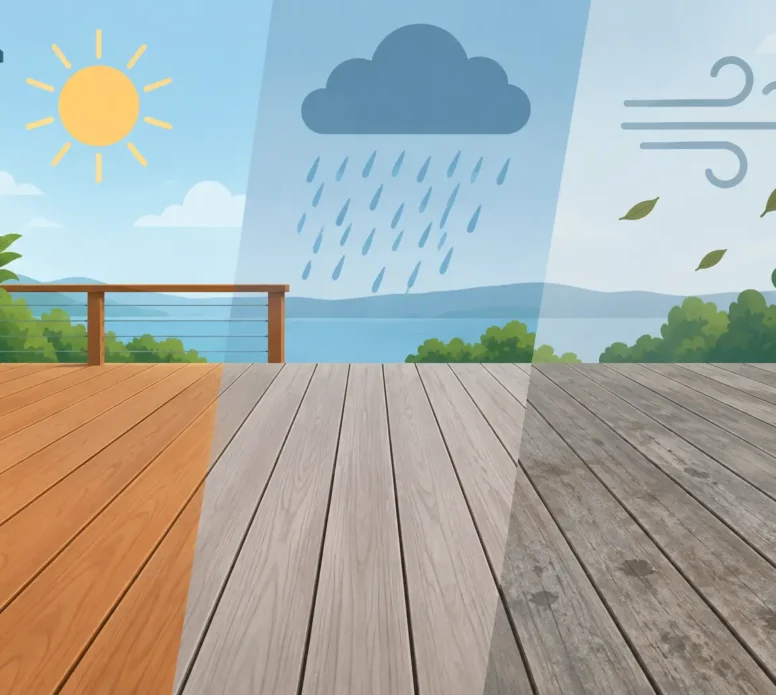
A timber deck can go from warm and inviting to pale, patchy and weathered surprisingly quickly. If you are asking what causes deck greying, the short answer is exposure. Sunlight, rain, overnight dew, coastal air and everyday use gradually alter the top layer of timber, particularly on decks that do not receive regular cleaning and protective maintenance.
Greying is common across Coffs Harbour and surrounding coastal areas, where timber is often working hard through strong UV, wet summers, humidity and salt-laden air. It is not always a sign that a deck is structurally unsound, but it is a useful prompt to check the timber, the coating and the areas where moisture may be lingering.
The main cause of grey timber is ultraviolet light. UV rays break down lignin, a natural component that helps bind timber fibres together. As this happens, the surface loses its original colour and takes on a silvery-grey appearance. Rain then washes away some of those weakened surface fibres, leaving timber looking faded, dry or uneven.
This process can happen even on a well-built deck. A north- or west-facing deck, or one with little shade, will usually change more quickly than a protected verandah. Bare timber is most vulnerable, but coatings that have worn thin or lost their water-repellent qualities will no longer provide much protection.
Greying often appears first on board edges, handrails, steps and the open centre of the deck. These are the areas that receive the most sun, rain and foot traffic. Covered sections may stay closer to their original colour, which can make the contrast look more noticeable.
Rain alone does not create the grey colour, but repeated wetting and drying accelerates weathering. Timber expands when it absorbs moisture and contracts as it dries. Over time, that movement can open small surface checks, loosen coating adhesion and create places for dirt, spores and moisture to settle.
Poor drainage makes the problem worse. Water held between boards, beneath outdoor furniture or against the house edge can leave dark patches and encourage mould or mildew growth. These marks are different from ordinary UV greying, although they often appear together on an ageing deck.
In coastal locations, salt spray can also sit on the surface. It attracts moisture and can contribute to a grimy, weathered finish if it is not washed away regularly. Decks close to the beach, pool areas and leafy gardens need more frequent attention than a sheltered deck in a dry, open position.
A grey deck is not always simply faded timber. Dirt, pollen, leaf tannins, barbecue residue and airborne pollution can build up in the grain. In damp, shaded conditions, mould and algae can add black, green or dark grey staining.
This matters for more than appearance. A slippery deck is a safety concern, especially on steps and around entry areas. Mould growth can also hold moisture against the timber, slowing drying times and placing extra strain on coatings.
Look closely at the colour before choosing a treatment. A uniform silver-grey surface is often UV weathering. Blotchy black or green marks point more towards organic growth or staining. Dark, soft areas around fixings or board ends may indicate a moisture issue that needs a closer inspection before any restoration work begins.
Not every part of a deck weathers at the same speed. Shade from a roofline, tree or outdoor setting can protect one area from UV while trapping moisture in another. A mat may stop sun exposure beneath it but retain dampness after rain. Planters can do the same, especially if water runs underneath them.
Traffic patterns also show up in the finish. Paths to the back door, pool or clothesline receive more abrasion from shoes, pets and furniture movement. This can wear through oil or stain faster than the surrounding boards, leaving lighter sections beside darker protected areas.
The timber species and previous treatment also make a difference. Dense hardwoods can last well outdoors, but they still weather on the surface. Softer timbers may absorb moisture and coatings more readily, so preparation and product selection are especially important. If a deck has been coated with a film-forming product that is now peeling, it requires a different approach from a deck finished with a penetrating oil.
Not necessarily. Surface greying is often cosmetic and can usually be cleaned and refreshed when addressed early. However, it should not be dismissed automatically. The same conditions that cause weathering can contribute to splitting, raised grain, loose fasteners, mould and timber decay where water is repeatedly trapped.
A practical check is to inspect the boards after the deck is clean and dry. Look for softness underfoot, spongy areas, deep cracks, loose nails or screws, persistent dark staining, and timber that flakes away when pressed. Pay particular attention to board ends, stairs, posts and sections near garden beds or downpipes.
If the timber is sound, restoration may involve cleaning, treating mould where required, sanding back weathered fibres and applying a suitable protective finish. If boards are deteriorated, replacement may be the better long-term option. Coating over compromised timber can improve the appearance briefly, but it will not solve an underlying moisture problem.
No exterior timber finish is permanent, particularly in the NSW coastal climate. The goal is to manage weathering before it becomes a bigger restoration job. Regular light maintenance is generally easier on the deck and more cost-effective than waiting until coatings have fully failed.
Keep the surface clear of leaf litter and debris so it can dry after rain. Wash off salt, dust and general grime with an appropriate deck cleaner and a controlled-pressure wash. Too much pressure, or holding the nozzle too close, can damage timber fibres and leave a rough finish that takes up dirt more readily.
Check that water can drain freely between boards and away from the home. Move mats, pots and outdoor furniture periodically, especially through wetter months. Trim back dense vegetation where practical to improve airflow, while keeping in mind that some shade can reduce harsh UV exposure.
A quality oil, stain or protective coating can help limit UV damage and water absorption, but the right choice depends on the timber, its condition and the finish you want. Clear products may preserve a natural look, yet they generally offer less UV protection than products with tint or pigment. Heavily pigmented finishes can protect more effectively from sun but may change the timber’s original colour and may need careful maintenance to avoid uneven wear.
Applying more product over a dirty, mouldy or failing surface is one of the quickest ways to get a disappointing result. The deck needs to be assessed first: what finish is already present, whether it is compatible with the intended coating, how much weathered timber must be removed, and whether there are repairs to complete.
Professional deck restoration is less about making timber look freshly coated for a week and more about creating a clean, stable surface that can hold its finish. That may mean washing, mould treatment, stripping or sanding selected areas, replacing damaged boards, setting fixings and allowing proper drying time before recoating.
For homeowners who enjoy maintaining their own deck, a small test area is worthwhile before treating the full surface. It can reveal how the timber takes up the product and whether the colour suits the home. For decks with widespread peeling, heavy mould, uneven staining or signs of deterioration, experienced advice can prevent unnecessary work and help protect the timber beneath.
The best time is before the deck becomes rough, slippery or badly stained. If water no longer beads on the surface, the colour has faded unevenly, or the timber feels dry and splintery under bare feet, it is worth planning maintenance. Waiting until a finish is peeling across the whole deck usually increases the preparation required.
Weather also affects scheduling. Timber should be dry before many treatments are applied, and the coating needs suitable conditions to cure. In humid coastal periods, allowing enough drying time is just as important as choosing the right product.
A grey deck does not have to stay grey, and it does not always need replacing. With a proper assessment and timely care, the timber can remain a comfortable, attractive part of your outdoor living area for years to come.