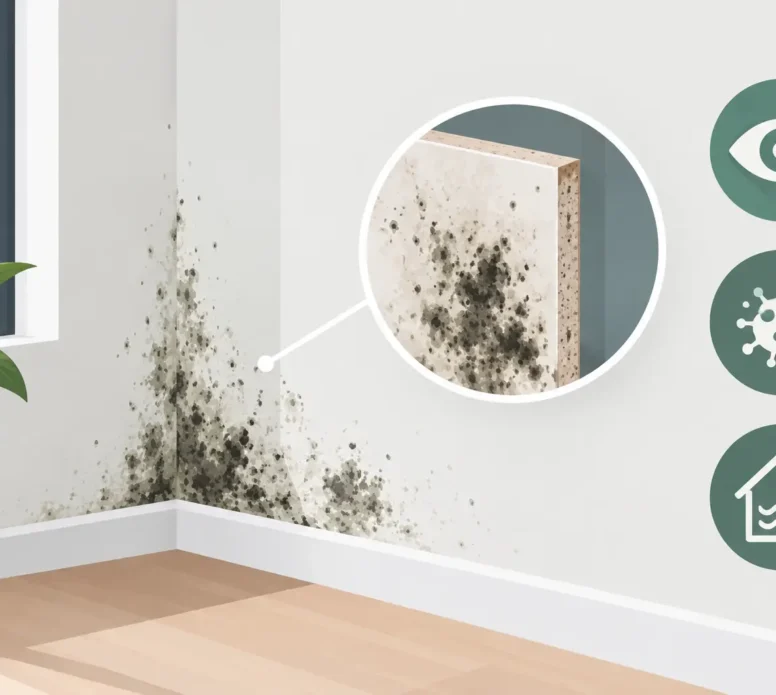
A small patch of mould on a bathroom ceiling can look like a cleaning job. But if it keeps returning, spreads beyond the surface, or the plasterboard feels soft, the issue may be more than cosmetic. So, can mould damage plasterboard? Yes. Mould itself is a warning sign that moisture has reached an area it should not, and prolonged dampness can weaken the lining behind your paint.
For homes, units and commercial properties around Coffs Harbour, this matters because coastal humidity, heavy rain, condensation and ageing building materials can all contribute to moisture problems. Acting early usually gives you more options. Waiting can turn a contained repair into a larger restoration project.
Plasterboard has a gypsum core covered by paper facing. That paper layer is organic, which gives mould something to grow on when there is enough moisture and limited airflow. The mould may begin as spotting on the paint film, but ongoing dampness can affect the paper, the joints, insulation and timber framing nearby.
Whether plasterboard can be saved depends on the source and duration of the moisture exposure. A light, isolated patch caused by brief condensation may be treated successfully once the area is cleaned, dried and the ventilation issue is addressed. Plasterboard that has been soaked by a leaking roof, burst pipe or repeated water ingress is a different situation. It can lose strength, swell at the edges, sag or crumble, even after it appears dry.
Painting over mould or water staining is not a lasting repair. Fresh paint may hide the marks temporarily, but it cannot dry out a cavity, stop a leak or restore damaged board. Proper preparation starts with finding the cause.
Mould can grow on a painted surface without the board being structurally damaged. The clues below suggest it is worth investigating more closely.
Gently press the affected area only if it is safe to access. Sound plasterboard should feel firm. A soft patch, bulging surface, sagging ceiling or swollen sheet edge points to water damage rather than surface mould alone. Ceiling linings deserve prompt attention, as wet plasterboard can become heavy and may eventually fail.
Brown, yellow or grey staining that comes back through paint often indicates moisture has remained in or behind the board. The visible mould may be only part of the issue, particularly around cornices, window reveals, external walls and ceiling penetrations.
Paint that blisters, flakes or peels without an obvious impact mark can signal dampness beneath it. Similarly, joint tape that lifts or creates raised lines may mean the plasterboard joints have absorbed water and the adhesive has failed.
A persistent damp smell is worth taking seriously, even when the marks seem minor. Recurring mould usually means the conditions that support it are still present. Cleaning improves the appearance, but it will not solve condensation, poor extraction, a plumbing leak or water entering through the roof or exterior cladding.
Before deciding whether to repair or replace plasterboard, identify how water is getting there. This is the step that protects the work that follows.
In bathrooms, laundries and kitchens, condensation is common. Hot showers, dryers, cooking steam and inadequate exhaust fans can leave moisture on ceilings and upper walls. If mould appears mostly in corners or above a shower, ventilation and day-to-day moisture control may be the main answer.
After heavy rain, marks around ceilings, windows, external walls or eaves can point to roof leaks, failed flashing, blocked gutters, damaged seals or exterior maintenance issues. In older homes, small leaks may travel before becoming visible, so the stain is not always directly below the entry point.
Internal leaks have their own pattern. A damp wall near a bathroom, hot-water service, fridge plumbing or laundry can be caused by a pipe, drain or appliance connection. If the area is wet, soft or actively leaking, turn off water where appropriate and arrange prompt assessment. Drying and repair should not begin until the leak has been resolved.
Cleaning and repainting may be suitable where mould is limited to the surface, the plasterboard is dry and firm, and the moisture source has been reliably fixed. The affected area needs to be cleaned using an appropriate mould treatment, allowed to dry fully, then prepared with the right primers and coatings for the room.
Preparation is particularly important. Loose paint, powdery residue and staining need attention before repainting, otherwise the new finish may fail early or allow marks to bleed back through. In a humid room, selecting a quality washable coating and improving ventilation can make a noticeable difference to how the surface performs.
There is a trade-off here. Surface treatment is less disruptive and can be effective for a small, resolved issue. But it is only sensible when the board has not deteriorated and there is no reason to suspect concealed moisture. Covering uncertainty with paint tends to cost more work later.
Damaged plasterboard is generally better removed and replaced if it is soft, swollen, sagging, crumbling, badly stained, or affected by extensive mould growth. Replacement may also be appropriate where moisture has been present for an unknown period or where there is concern that mould has spread into the wall or ceiling cavity.
Removing affected sections allows the area behind the board to be inspected and dried properly. It also gives the repairer a chance to check nearby insulation, framing and services before installing new lining. Once the substrate is sound, the new board can be set, sanded, sealed and painted to match the surrounding surface.
For strata properties, rentals and commercial premises, early reporting is especially useful. Moisture can cross lot boundaries or affect common-property elements, and clear documentation helps the right repair work be coordinated without unnecessary delay.
A repaired wall or ceiling will perform best when the room is kept as dry as reasonably possible. Run exhaust fans during showers and for a period afterwards, open windows when weather allows, and avoid drying washing indoors without ventilation. Check that bathroom fans actually vent outside rather than into a roof space.
Outside, keep gutters and downpipes clear, watch for overflowing water during rain, and maintain roof, sealant and exterior paint systems. Sound external coatings and well-maintained timber, eaves and trims help reduce the pathways through which moisture can reach internal linings.
It also helps to deal with small changes promptly. A new ceiling stain, a patch of peeling paint or a fine mould bloom is easier to assess before it becomes a widespread issue. Regular cleaning alone is not prevention if the same area keeps becoming damp.
If you can see mould and are unsure whether the plasterboard is affected, avoid assuming the worst – but do not dismiss it as a paint problem either. Look for changes in texture, odour, staining and repeat growth, then consider what may be supplying the moisture. Photographs taken before cleaning can also help track whether the problem returns.
For a firm, dry surface with a resolved cause, careful mould treatment and professional repainting may restore the area well. Where the lining is soft, sagging or repeatedly affected, an inspection and targeted repair is the safer path. Harbour Painting Solutions approaches mould-affected surfaces with the preparation they need, because a clean, durable finish starts well before the first coat of paint. Taking action while the signs are small helps protect both your property and the comfort of the people using it.