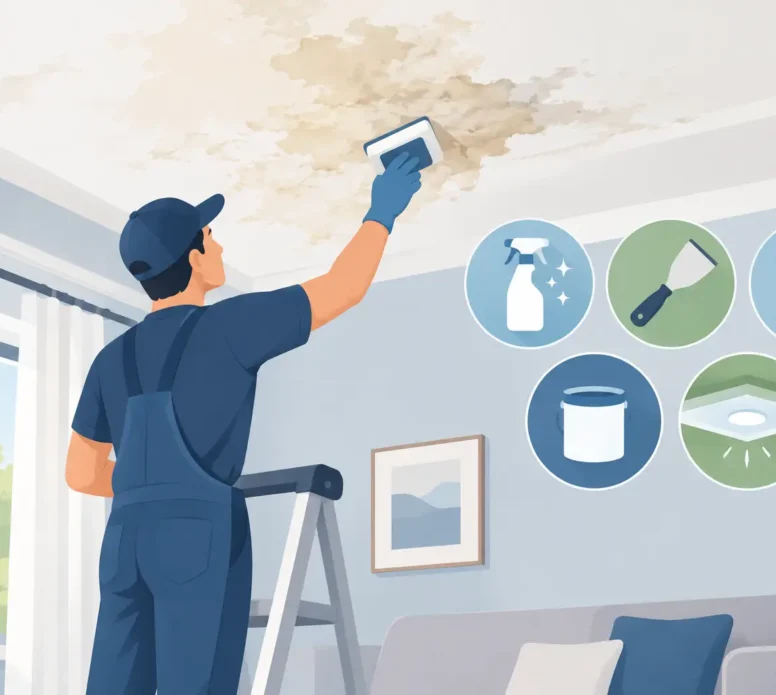
A ceiling stain can make an otherwise tidy room feel neglected. More importantly, it is often a sign that something above the paint needs attention. The best solutions for stained ceilings start with finding the cause, then repairing, sealing and repainting the surface in the right order. Painting over a mark too soon may hide it briefly, but stains from moisture, mould or smoke have a habit of returning.
For homes, units and commercial properties around Coffs Harbour, ceiling stains are common after heavy rain, roof issues, plumbing faults and periods of humid weather. A careful approach protects both the appearance of the room and the condition of the property.
The shape, colour and location of a stain can offer useful clues. A yellow, brown or rust-coloured ring is usually associated with water. It may be caused by a leaking roof, damaged flashing, an overflowing gutter, a failed waterproofing detail, a leaking pipe or condensation in the roof space.
A dark, spotty or grey-green mark can point to mould growth, especially in bathrooms, laundries, bedrooms with limited airflow, or rooms affected by damp. Smoke residue from candles, fireplaces or cooking tends to leave a more widespread grey or yellow film. Nicotine staining can also bleed through new paint unless it is properly sealed.
Look closely at the surrounding area. Is the ceiling soft, bowed or flaking? Is there a musty smell? Has the stain grown after rain? Are nearby walls, cornices or light fittings also affected? These details help determine whether the issue is active or simply an old mark left after a previous repair.
If a stain is close to a light fitting, switches, or electrical wiring, arrange for an electrician to assess it before any cleaning or painting begins. Water and electricity are not a DIY combination.
The right coating system cannot compensate for an unresolved leak. Before preparing the ceiling, make sure the cause has been identified and repaired. That may mean repairing roof tiles or metal sheeting, clearing and correcting gutters, replacing damaged flashing, repairing a plumbing line, improving bathroom ventilation, or addressing a waterproofing failure upstairs.
With roof leaks, a small entry point can travel along framing or insulation before it appears inside. The stain on the ceiling is not always directly beneath the fault. This is why a proper inspection of the roof, roof space and ceiling area is often more useful than treating the visible patch alone.
Once repairs are complete, the affected area needs time to dry thoroughly. Rushing this stage can trap moisture beneath new coatings, leading to bubbling, peeling or mould returning. Drying time depends on the size of the leak, the material involved, weather conditions and ventilation. A ceiling that looks dry may still hold moisture within the plasterboard or insulation.
If plasterboard has sagged, crumbled, softened or lost its shape, replacement is generally the better option. Repainting damaged board may improve the colour temporarily, but it will not restore the ceiling’s strength or clean lines.
Mould on a ceiling is a moisture and ventilation problem as much as a cleaning problem. In coastal areas, humidity can make bathrooms, bedrooms and shaded rooms particularly vulnerable. Cleaning visible growth without reducing moisture often leads to repeat outbreaks.
For a small, contained area, use an appropriate mould treatment following the product directions, wear protective gloves and eye protection, and ventilate the room well. Avoid aggressively dry-brushing mould, as this can spread spores through the room. Do not simply paint over active mould. It can continue growing beneath the coating and spoil the finish.
Larger areas, repeated mould, or mould associated with water damage deserve professional assessment. The underlying issue may involve inadequate exhaust ventilation, roof leaks, plumbing leaks, poor drainage, insulation gaps or condensation. In rental, strata and commercial settings, documenting the cause and repair process also helps property decision-makers plan maintenance with confidence.
Once the source is resolved and the area is dry, preparation determines how well the repair blends into the rest of the ceiling. Start by protecting floors and furnishings, then remove loose or peeling paint with suitable tools. Light sanding can feather the edge between sound paint and repaired areas, helping prevent a visible outline after painting.
Patch small dents, cracks or minor surface damage with a quality ceiling patching compound. For a water stain that has caused paper bubbling or plasterboard damage, inspect carefully before patching. There is little value in smoothing over material that is no longer sound.
Older homes need an extra measure of care. If the ceiling has textured coatings, old fibre-cement sheeting, or materials of uncertain age and composition, do not sand, drill or disturb it until any potential asbestos risk has been properly considered. A professional assessment is the safest path where there is doubt.
After patching, sand the repaired area smooth and remove dust. Ceiling paint is generally low-sheen or flat, which hides minor imperfections better than glossier finishes. Even so, side light from windows can expose poor patching, roller marks and uneven texture. Good preparation shows up most when the afternoon light hits the room.
This is the step most often missed in quick ceiling touch-ups. Standard ceiling paint is not designed to lock in water marks, tannins, smoke residue or nicotine. Without a suitable stain-blocking primer, a brown or yellow patch may bleed back through even after several coats of white paint.
Choose a primer suited to the stain and the existing surface. Water stains, smoke damage and heavy discolouration may require a specialised blocking sealer rather than a general-purpose undercoat. Apply it to the affected area according to the manufacturer’s coverage and drying instructions. Some severe stains need a second sealing coat.
There is a trade-off with spot priming. It is efficient for one small repair, but a freshly primed patch can sometimes create a different surface texture or sheen beneath the final coat. For the most even result, particularly on older or sunlit ceilings, repainting the entire ceiling from edge to edge is usually preferable.
A small touch-up can work where the existing paint is recent, clean and still available. In many homes, though, ceiling paint has aged slightly from light, cooking residue and normal wear. A new white patch can look brighter than the surrounding area, even when the colour name is the same.
Painting the full ceiling creates a consistent colour and sheen. It also allows the painter to maintain a wet edge and avoid lap marks. Use a ceiling paint designed for the job, apply it evenly, and allow appropriate drying time between coats. Two finish coats are commonly needed for a uniform, durable result, especially after stain sealing.
For high ceilings, stairwells, units with occupied rooms, strata common areas or commercial spaces, professional painting can make the process safer and less disruptive. The work is not simply rolling on paint – it involves protecting the space, managing surface preparation, selecting compatible primers and delivering a clean finish around cornices, fittings and access points.
Prevention is usually less disruptive than another ceiling repair. Keep gutters and roof drainage clear, particularly before wet weather. Arrange periodic roof inspections where the property is exposed to coastal wind and rain. Use exhaust fans during and after showers, and check that they vent effectively rather than simply recirculating humid air.
Pay attention to small changes. A fresh ring after rain, peeling paint near a cornice, a damp smell in a cupboard, or recurring mould in the same corner is worth investigating early. Minor maintenance can prevent a patch repair becoming a larger ceiling replacement.
For property owners who would rather have the diagnosis, preparation and repainting coordinated properly, Harbour Painting Solutions can assess the surface condition and help restore the room with care. A clean, even ceiling is satisfying to see, but the real peace of mind comes from knowing the issue behind the stain has been dealt with properly.