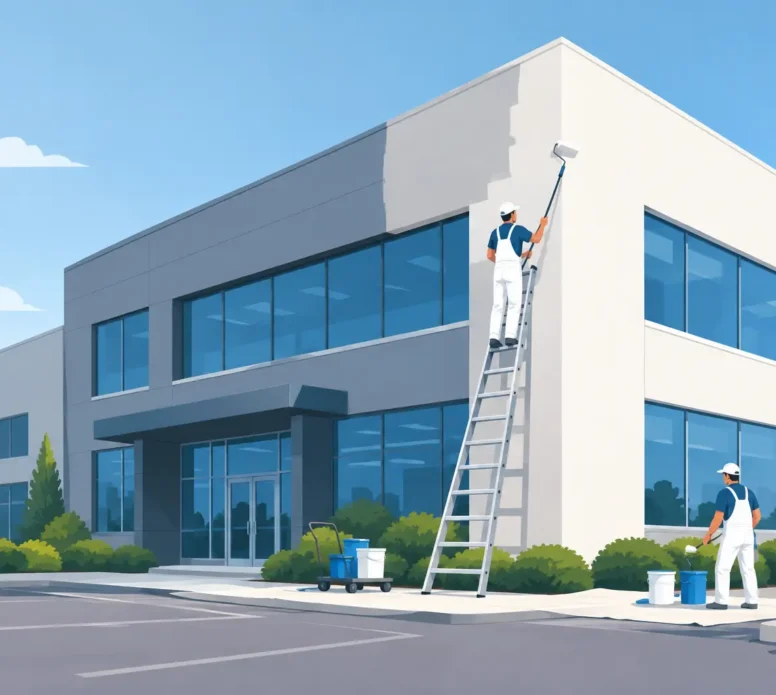
A tired façade, peeling trim or stained entry can change how customers, tenants and staff see a building before they walk through the door. This commercial building repaint guide helps property decision-makers plan work properly, protect the asset beneath the paint, and keep day-to-day operations moving while the job is underway.
For commercial buildings, repainting is rarely just a matter of choosing a colour and booking painters. The condition of the existing surface, access requirements, tenant needs, weather exposure and the intended life of the coating system all affect the right approach. A careful plan at the start avoids rushed decisions, unnecessary disruption and finishes that fail early.
A repaint should begin with a close inspection of each surface. Paint can hide small imperfections for a short time, but it cannot repair movement, moisture entry, rotten timber, corroded metal or failing render. If those issues are painted over, the new coating may blister, crack or peel well before it should.
Look beyond the obvious faded walls. Check eaves, gutters, fascia boards, handrails, bollards, doors, window frames, loading areas and shaded elevations. These areas often weather differently. On the Coffs Coast, salt air, high humidity, heavy rain and strong sun can place very different demands on one side of a building than another.
Mould and algae also need proper attention. They are not simply cosmetic marks. Surfaces must be cleaned and treated appropriately before painting, otherwise growth can return beneath or through the new finish. A professional assessment should identify whether staining is superficial or linked to poor drainage, leaks, inadequate ventilation or another moisture problem.
A clear scope gives everyone a better starting point. It should identify the areas to be painted, the surfaces involved, repairs required before coating, access methods, protection measures and the expected finish. This is particularly useful for strata buildings and multi-tenant properties, where a repaint may involve common areas, private-use spaces, signage zones and shared access points.
Be specific about what is excluded as well. For example, a wall repaint may not include corroded window frames, roof restoration or timber replacement unless these items are inspected and allowed for. Clear detail prevents assumptions from becoming problems once work has started.
A well-run commercial repaint respects the building’s purpose. A retail shopfront, medical practice, warehouse, office complex and strata foyer all have different traffic patterns, safety risks and acceptable work hours. The painting plan should work around those realities rather than forcing the occupants to work around the painters.
Talk through delivery times, customer access, staff parking, noisy preparation work, alarm systems, security arrangements and any sensitive areas. For food businesses, health services and childcare settings, dust control and hygiene requirements need extra care. In offices and shared buildings, notice periods and a staged programme can make the experience much easier for occupants.
Exterior work may need temporary barriers, elevated work platforms or other access equipment. Interior work may require furniture to be shifted, floors covered and certain rooms completed outside business hours. There is always a trade-off: completing the job in one concentrated period can reduce the overall programme, while staging work can reduce the impact on tenants and customers. The best choice depends on how the premises operate.
A simple communication plan can make a major difference. Let people know what area will be worked on, when access may be limited, whether there will be odours or noise, and who to contact with a practical question. Vague notices create frustration. Clear updates allow tenants and staff to plan around the work.
For strata committees and managers, nominate one point of contact to coordinate decisions and distribute updates. This avoids conflicting instructions and keeps variations or access issues from slowing down the programme.
The most visible part of a repaint is the fresh colour. The most important part is usually the work completed before that colour goes on. Thorough preparation is what allows a coating system to bond correctly and provide lasting protection.
Preparation may include pressure cleaning, mould treatment, scraping loose paint, sanding rough edges, filling cracks, patching damaged render, repairing timber, treating rust and sealing bare areas. Different materials need different products and methods. Timber needs attention to moisture and movement; metal needs corrosion treatment; masonry can need repairs and suitable primers; previously painted surfaces need checks for chalking, adhesion and compatibility.
Not every surface should be pressure cleaned at the same pressure, either. Too much force can damage aged timber, dislodge loose render or drive water into vulnerable joints. The goal is a sound, clean and dry surface, not simply the quickest wash-down.
Allow drying time between washing, repairs, primers and topcoats. This can be affected by weather, shade and humidity. Rushing a coating onto a damp substrate may lead to trapped moisture and early failure. A reliable painting contractor will adjust the sequence when conditions are unsuitable rather than treating the schedule as more important than the result.
Colour matters, but coating selection matters just as much. A product suitable for a low-traffic internal office wall may not be right for a sun-exposed façade, a busy stairwell or metalwork near the coast. Commercial areas often benefit from finishes selected for cleanability, durability and the level of wear they receive.
External coatings need to handle ultraviolet exposure, rain and temperature changes. In coastal locations, metal elements may need a more considered protective system due to salt exposure. Internal high-touch areas such as corridors, doors and reception spaces may need a tougher, washable finish that can be maintained without constant touch-ups.
Sheen level is another practical decision. Higher-sheen finishes are generally easier to wipe down, but they can show surface imperfections and patching more readily. Lower-sheen finishes can give a softer look on large walls, though they may be less forgiving in heavy-use spaces. Samples viewed in the building’s actual light are more useful than choosing from a small colour card alone.
A repaint is an opportunity to improve wayfinding and presentation. A restrained palette can make a multi-building site feel organised, while accent colours can help define entrances, levels or customer-facing zones. Consider existing signs, landscaping, roof colour, neighbouring buildings and any brand requirements before finalising selections.
Very dark colours can add visual impact, but they may absorb more heat and make touch-ups more noticeable. Light colours can brighten shaded areas, although they may show dirt more quickly near driveways, loading bays or footpaths. There is no single best choice – it depends on the building’s exposure, maintenance plan and intended impression.
Painting work should leave the site safer and tidier, not create ongoing hazards. Before work begins, confirm how pedestrians, customers, deliveries and vehicles will move around the property. This is especially important where access equipment, drop sheets, wet paint or pressure-cleaning work could affect shared areas.
A professional site setup includes practical protection for windows, landscaping, floors, signage and nearby vehicles. It also means keeping tools and materials organised, containing dust where possible, and removing rubbish regularly rather than allowing it to build up around the premises.
Access is often one of the biggest variables in a commercial project. A low single-storey building may be straightforward, while a complex with upper levels, narrow side access, awnings or busy public areas may need more planning. Raising access concerns early helps establish a realistic programme and avoids last-minute changes once crews arrive.
You do not need to wait until the final day to assess a repaint. Walk through the project at key points: after preparation, after repairs and priming, and once the finish coats are complete. This makes it easier to confirm that the agreed scope is being followed and that any unforeseen substrate issues are discussed promptly.
At completion, inspect the work in both direct and indirect light. Look for missed areas, thin coverage, drips, rough patches, poor cut-ins, overspray and unprotected surfaces. Check that fixtures, paths and entry areas have been left clean. A quality finish should look consistent, but it should also reflect the careful preparation happening underneath it.
Keep a record of the colours, products and areas completed. It will be useful for future touch-ups, planned maintenance and decisions about the next stage of the property.
A new paint job lasts longer when the building is maintained between major repaints. Regular washing can remove salt, grime, cobwebs and biological growth before they become embedded. Promptly addressing leaking gutters, damaged sealant, impact damage and drainage issues protects both the coating and the structure.
The right maintenance interval depends on exposure and use. A sheltered office interior may need little more than routine cleaning, while coastal façades, timber features and high-traffic entries deserve more frequent checks. Harbour Painting Solutions can help property owners assess surfaces before minor wear becomes a larger restoration project.
A commercial repaint should give your building more than a fresh face. When it is planned around sound preparation, suitable coatings and the people using the premises, it becomes a practical investment in presentation, protection and pride in the property.