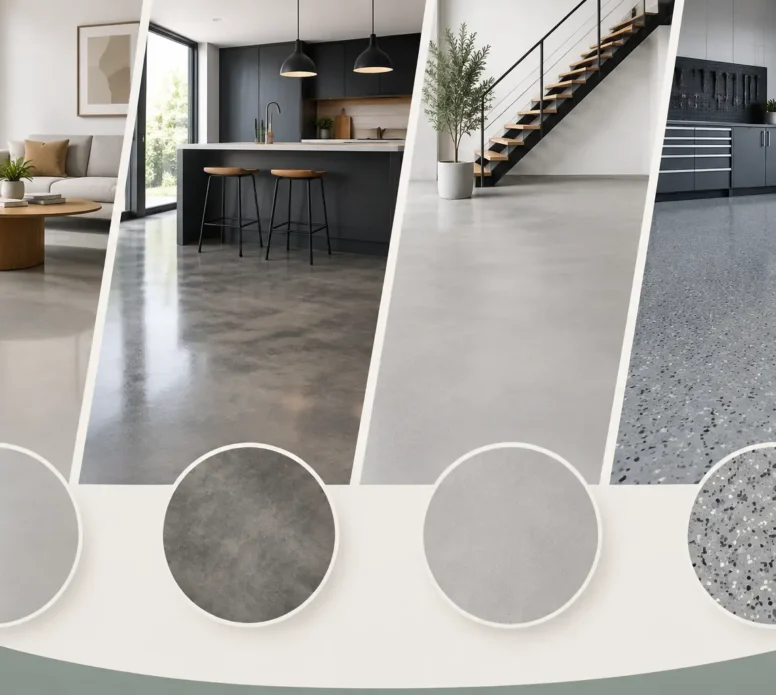
A plain concrete slab can be practical, but it often shows tyre marks, dust, stains and every bit of daily wear. The right concrete floor finish options can turn that same surface into a cleaner, tougher and more attractive part of your property – whether it is a garage, workshop, shopfront, patio or living area.
The best choice is rarely just about colour. It comes down to how the space is used, the condition of the concrete, moisture levels, slip resistance and how much maintenance you are prepared to take on. Good preparation matters just as much as the finish itself. A coating may look excellent on day one, but it needs a clean, sound and properly prepared slab to stay that way.
Before choosing a finish, inspect the floor honestly. Older slabs can have oil contamination, surface dusting, cracks, previous coatings, moisture issues or uneven areas. These conditions do not automatically rule out a new finish, but they affect the preparation required and which products are suitable.
In coastal areas around Coffs Harbour, concrete can also be exposed to humidity, wind-driven rain and salt-laden air. Covered garages and commercial spaces may still have moisture moving through the slab, particularly where drainage or ventilation is poor. If moisture is not addressed before a coating is applied, it can lead to bubbling, peeling or patchy adhesion.
Preparation can include pressure cleaning, degreasing, diamond grinding, crack repairs, patching and moisture testing. This work is not the glamorous part of a floor upgrade, but it is where the durability of the finished surface is decided.
Epoxy is a popular choice for garages, workshops, commercial areas and other hardworking spaces. It creates a continuous coated surface that is easy to clean and can provide strong resistance to tyre marks, oil, chemicals and everyday abrasion.
It is also one of the more flexible decorative options. Epoxy can be finished in solid colours, decorative flake blends or a more subtle textured appearance. Decorative flakes are especially useful in garages and utility areas because they help disguise dust and minor marks while giving the floor a more finished look.
The trade-off is that epoxy needs careful substrate preparation and suitable application conditions. A slab with rising moisture, poor surface strength or embedded oil needs attention before coating begins. In areas that may become wet, such as entries, commercial work zones or around pool-adjacent spaces, a slip-resistant additive or textured finish should be considered.
Polished concrete suits homeowners and commercial operators wanting a refined, modern floor with a long service life. The process mechanically grinds and polishes the concrete surface, often with a densifier applied to harden the slab and reduce dusting. The result can range from a soft matte sheen to a high-gloss finish.
One advantage is that polished concrete is not simply a film sitting on top of the slab. It becomes part of the surface itself, so there is no coating layer to peel. It works particularly well in interiors, retail spaces, showrooms and contemporary homes where a clean, minimal finish is desired.
However, the final appearance depends heavily on the slab beneath it. Existing patches, aggregate, repairs and variations in the original pour may remain visible. That character can be appealing, but it is not the right choice for everyone. Polished floors can also feel hard and cool underfoot, so rugs, acoustic treatments and thoughtful furniture choices may be worthwhile in living areas.
A grind and seal system sits between basic sealed concrete and fully polished concrete. The surface is ground to improve its appearance and remove imperfections, then protected with a clear or coloured sealer. It can provide a neat, low-sheen finish without the extra grinding stages involved in polishing.
This option is useful where you want an upgraded concrete look while working with an existing slab that has some character. A clear sealer can enhance the natural tones of the concrete, while coloured sealers can create a more uniform finish.
Sealers vary in appearance and performance. Some provide a natural matte look, while others bring more gloss. They may need periodic recoating in busy areas, particularly where the floor is exposed to vehicle traffic, direct sunlight or frequent cleaning. Choosing the right sealer for the environment is essential rather than treating all clear coats as the same.
Stains and dyes add colour variation without creating a thick coating. They can produce anything from soft earth tones to deeper contemporary shades, depending on the product and the existing concrete. Because the colour interacts with the slab, each floor has its own variation rather than a perfectly uniform painted appearance.
Acid stains can create mottled, mineral-like effects, while water-based stains and dyes allow for broader colour choices and more controlled results. These finishes are commonly protected with a sealer to improve durability and simplify cleaning.
This approach is best for spaces where visual character matters more than hiding every imperfection. Repairs, cracks and previous marks may still show through, and a heavily damaged or uneven slab may need another finish system. Stains can look excellent in entertaining areas, retail settings and internal concrete floors with the right preparation and expectations.
For a practical, understated solution, penetrating sealers protect the concrete without dramatically changing how it looks. They soak into the surface rather than forming a visible film, helping resist water, stains and surface deterioration.
They are a sensible option for driveways, outdoor paths, patios and other areas where you want protection while keeping the natural concrete appearance. A penetrating sealer will not hide existing stains, cracks or colour variation. Its role is preservation, not a visual makeover.
Outdoor areas need particular care when selecting a product. The finish should suit sun exposure, wet weather and the level of grip required. A glossy surface may look appealing initially, but it may not be appropriate on a sloping path or a frequently wet entertaining area.
When a concrete slab is structurally sound but cosmetically tired, a decorative overlay can provide a fresh surface to work with. These systems can smooth out minor imperfections or create finishes that resemble stone, terrazzo or a modern cement look.
Overlays are not a shortcut around serious slab movement, major cracking or moisture issues. Those causes need to be assessed first. But for worn indoor floors, commercial entries or renovation projects where an existing slab needs a new appearance, resurfacing can be a practical alternative to removing and replacing concrete.
A garage floor has different demands from a living room floor. Vehicle traffic, hot tyres, oil drips and tools point many owners towards epoxy or another hardwearing coating system. A polished or grind and seal floor may be better suited to an internal living space where appearance, easy cleaning and a natural concrete look are the priorities.
For commercial properties, think beyond looks. Staff and customer safety, cleaning routines, foot traffic, trolley movement and downtime all influence the right specification. A finish that works beautifully in a quiet office may not hold up in a busy service area.
Outdoor concrete needs a different lens again. UV exposure, rain, leaf matter and slip resistance should guide the decision. Protection is valuable, but the finish must remain safe and manageable through changing weather.
Floor finishes have a major effect on how light moves through a room. Pale grey and neutral tones can make a garage, studio or commercial space feel larger and brighter. Dark colours can look sharp, but they may show dust, salt residue or pet hair more readily. Decorative flake systems offer a useful balance by softening the appearance of everyday marks.
Gloss level should be chosen for the space, not just a showroom sample. High-gloss finishes can look striking, especially in clean interiors, but matte and satin finishes are often more forgiving in family homes, workshops and high-traffic properties. Texture can improve grip, though too much texture can make mopping more difficult.
Concrete finishing is a system, not just a product applied from a tin. The surface needs to be assessed, cleaned and prepared for the finish selected. Cracks need the right repair method, contaminants need to be removed properly, and the coating or sealer needs enough time to cure before the floor returns to service.
At Harbour Painting Solutions, this starts with understanding how the area is used and what the slab is telling us. Clear communication about preparation, finish expectations and care requirements helps property owners make a confident choice and avoid unwelcome surprises.
A well-chosen concrete finish should make the space easier to use, easier to maintain and more enjoyable to come home to or work in. Begin with the condition of the slab, be realistic about the demands of the area, and choose a finish that will still suit your property long after the first clean, fresh look has settled in.