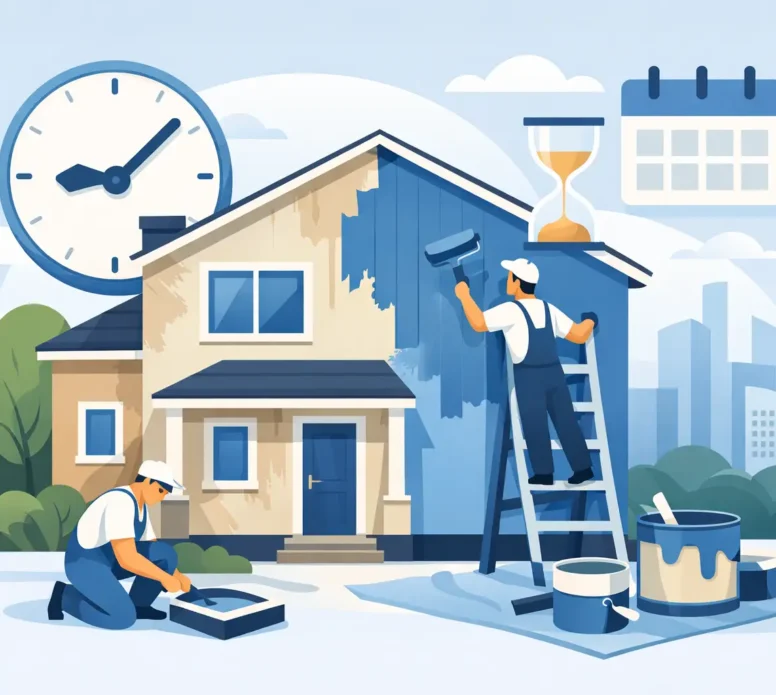
A freshly painted room or exterior can make a property feel completely renewed, but the visible painting is only one part of the work. The first question most owners ask is, “how long does repainting take?” The honest answer depends on the surface condition, the size of the area, access, weather and how much preparation is needed before a brush or roller comes out.
For a sound, well-maintained surface, repainting can move along quickly. For an older home, a coastal exterior, a mould-affected wall or weathered timberwork, careful preparation can take longer than the paint application itself. That is not lost time. It is the work that helps the new finish look better and last longer.
An average bedroom may take two to four days from preparation to final coat, allowing for drying time. A living area, kitchen or open-plan space can take longer, particularly where ceilings, trims, doors and detailed cutting-in are included. Repainting a full interior home commonly takes one to two weeks, although larger homes or properties with extensive repairs can require more time.
The biggest variable indoors is usually the condition of the existing walls and timberwork. Minor scuffs and small nail holes are straightforward. Peeling paint, water staining, damaged plaster, previous patch repairs or glossy surfaces need more attention. Walls may need washing, filling, sanding, spot priming and, in some cases, stain blocking before the finish coats can begin.
Furniture also affects the programme. A room that is cleared before work starts is easier to protect, prepare and paint efficiently. If large items need to stay in place, a professional crew can cover and move them carefully, but this adds handling time and limits how much of the room can be worked on at once.
Most modern interior coatings dry to the touch within a few hours, but that does not always mean they are ready for the next coat, heavy use or furniture pushed back against the wall. Painters follow the manufacturer’s recoat times and adjust where humidity or poor ventilation slows drying.
For households, the practical timing matters as much as the coating schedule. A bedroom may be painted and left to air overnight before being put back into use. Kitchens, hallways and family rooms often need to be planned in stages so daily life can continue with as little disruption as possible.
Exterior repainting is more dependent on the condition of the building and the weather. A smaller, well-kept single-storey home might be completed within a week. A full exterior repaint of a larger home can take one to three weeks. Two-storey properties, difficult access, extensive timber detailing, roofs, decks or substantial restoration works may take longer.
On the Coffs Coast, salt air, rain, humidity and strong sun all place pressure on exterior coatings. These conditions make surface preparation particularly important. If paint is chalking, cracking or lifting, simply coating over it may give a short-term visual improvement but will not provide a dependable finish. Loose paint needs to be removed, bare areas primed, gaps sealed where appropriate and surfaces cleaned before repainting.
Weather can also change the calendar. Exterior paint needs suitable conditions to cure properly. Rain, high humidity, damp surfaces or very hot conditions can delay application, even if the crew is ready to continue. A sensible painting schedule allows for this rather than rushing a coat on when conditions are unsuitable.
A good exterior repaint commonly includes pressure cleaning, scraping, sanding, filling, sealing, spot priming and protection of windows, paths, gardens and surrounding surfaces. Timber may need extra attention where it has weathered, split or begun to deteriorate. Mould must be properly treated rather than painted over, or it may return beneath the new coating.
These steps can seem slow from the outside, especially when the building has not yet changed colour. They are also where long-term performance is decided. Proper preparation creates a clean, stable surface for the new paint to bond to.
The size of a property is only one piece of the timing puzzle. A small job with difficult repairs can take longer than a larger job with sound, clean surfaces. The following issues commonly add time to a repainting schedule:
For strata and commercial properties, coordination can also influence timing. Work may need to be sequenced around residents, tenants, deliveries, parking areas or other trades. A clear plan helps keep the site safe, tidy and functional while the project progresses.
Most painting projects move through four practical stages: inspection and planning, surface preparation, paint application, then final checking and clean-up. The balance between those stages changes from one property to the next.
The inspection stage identifies what is actually required. This is when issues such as flaking paint, dampness, mould, timber damage or surface contamination should be spotted. It is also the right time to confirm colours, gloss levels, access arrangements and which areas need to remain usable during the work.
Preparation follows. For an interior refresh with sound walls, this may be relatively brief. For an older exterior, it can be a significant part of the project. Once surfaces are ready, painters apply primers where needed and complete the required finish coats, observing proper drying times between each one.
The last stage is not an afterthought. It includes checking coverage and edges, removing masking and protective coverings, tidying the work area and walking through the completed work. A clean site and a careful final inspection make a real difference to the experience of having trades at your property.
If you are repainting before moving in, listing a property for sale, welcoming tenants or preparing for a busy holiday period, allow more time than the painting itself may appear to need. Colour choices, repairs and weather can all affect a start date or completion date. Booking early gives more room to plan the job properly rather than forcing it into a tight window.
For interior work, remove fragile items, clear small furniture and make arrangements for rooms that will be temporarily unavailable. For exterior work, keep access areas clear and let the painters know about pets, gates, irrigation systems or any access restrictions. These small details prevent avoidable delays on site.
It also helps to discuss priorities at the start. If one bedroom, a shopfront or a common access area must be finished first, the work may be able to be staged around that need. Clear communication is especially valuable for occupied homes, strata complexes and operating businesses.
A reliable repainting timeframe is not about promising the fastest possible job. It is about allowing enough time to prepare properly, work with the conditions and leave every surface looking cared for. When you are planning a repaint in Coffs Harbour or surrounds, an on-site assessment is the best way to turn a broad estimate into a practical schedule for your property.