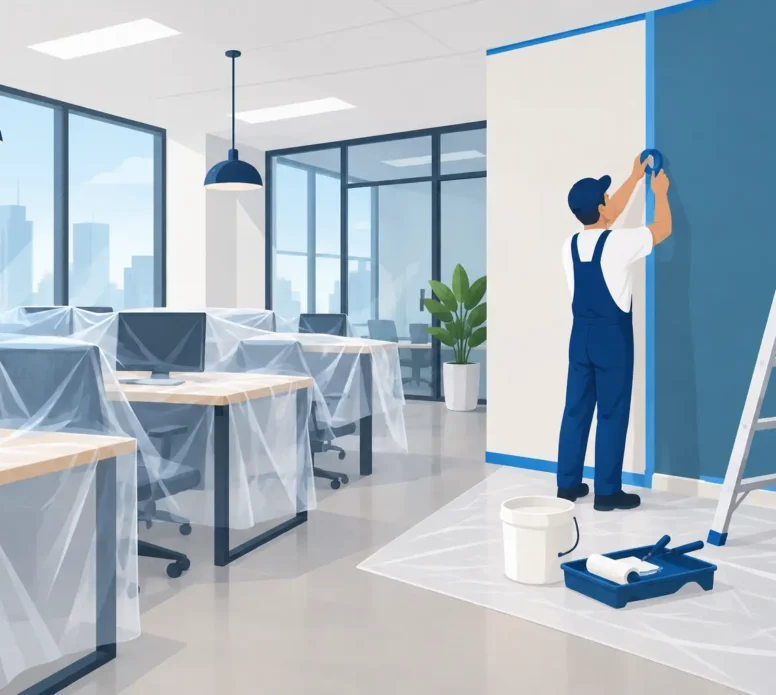
A fresh office can lift the way clients see your business and make the space more pleasant for staff to use each day. But office repainting preparation is what determines whether the project feels controlled or becomes an unwelcome interruption. The right planning protects computers, furniture and flooring, gives coatings the surface they need to last, and keeps your workplace functioning as normally as possible.
For a small office, preparation may be a matter of clearing a few rooms and scheduling work after hours. For a larger commercial suite, shared tenancy or strata building, it can involve staged access, building-manager approvals, staff notices and careful coordination with other trades. Starting these conversations early makes a significant difference.
Before colours are selected or desks are shifted, be clear about what the repaint needs to achieve. Is the office simply looking tired after years of daily use? Are there scuffs around corridors, reception walls and meeting rooms? Is the work part of a lease handover, a refresh before opening, or a wider maintenance project that includes damaged plaster, water staining or mould?
The answer affects the scope of preparation. A cosmetic refresh on sound walls may need cleaning, minor filling and spot priming. Peeling paint, recurring damp marks or mould growth should not be painted over and forgotten. Those issues need to be assessed, treated and, where possible, their underlying cause addressed before new coatings go on.
Coastal conditions around Coffs Harbour can add another layer of consideration. Humidity, salt-laden air and wind-driven moisture can affect exterior-facing surfaces and poorly ventilated rooms. If an office has condensation around windows, staining near ceilings or musty odours, raise it during the initial inspection. Good preparation is about solving the condition of the surface, not merely changing its colour.
A professional painting project should fit around the practical needs of your business. Reception areas, staff amenities, customer-facing rooms and emergency exits all have different requirements. The best schedule is not always the fastest one. It is the one that gives the crew suitable access while protecting safety, productivity and the quality of the finish.
Talk through normal operating hours, quieter periods, client appointments, delivery times and any areas that cannot be taken offline. Painting can often be staged room by room, by floor, or outside business hours where access and the scope allow. Staging helps reduce disruption, although it can extend the overall project period. A full closure may be more efficient for some businesses, while a staged approach better suits workplaces that need to remain open.
Staff should know what is happening before work begins. Let them know which rooms will be unavailable, where temporary workstations are located, whether access routes will change and who to contact if something needs attention. Clear communication avoids the morning surprise of a meeting room being unavailable just before an important presentation.
If you lease your office, check the lease and speak with the property manager before work is booked. There may be requirements around approved colours, access hours, lift use, rubbish removal, loading zones or noise. In a strata or multi-tenant property, the building manager may also need notice of contractor attendance and any works affecting common areas.
This is especially relevant when repainting corridors, foyers, shared amenities or external façades. These spaces require thoughtful traffic management and a clear understanding of who approves the work. Sorting approvals before the start date is far easier than pausing a project once preparation has begun.
Painters need safe, workable access to walls, ceilings, doors, skirtings and window frames. That does not mean your team must empty the entire office without guidance. A site walk-through should identify what needs to be moved, what can stay in place under protection and what requires specialist handling.
Remove personal items, loose paperwork, artwork, plants and small electronics from the work area. Secure confidential files and sensitive documents well before the crew arrives. If desks, shelving or heavy cabinetry cannot be moved, they can often be grouped away from walls and carefully covered, provided there is enough room to work safely.
Computers, monitors, printers and server equipment deserve particular attention. Dust from sanding is controlled through proper methods and clean work practices, but it is sensible to relocate delicate equipment where possible. Where a server room must remain operational, discuss ventilation, access restrictions and protection measures beforehand. Never block electrical panels, fire equipment, exit paths or essential workplace safety signage.
Good office repainting preparation includes more than drop sheets on the floor. Carpets, vinyl, timber flooring, glass partitions, joinery, benchtops and signage all need suitable protection. The materials used should suit the surface and the duration of the work. For example, taped protection must be removed carefully to avoid marking delicate finishes, while high-traffic paths may need a stronger temporary covering.
It is also worth identifying items that should not be painted. Feature timber, exposed brick, polished concrete, acoustic panels and existing signage can all sit close to painted areas. A clear scope and a pre-start walk-through help prevent assumptions about what is included.
At Harbour Painting Solutions, careful protection and tidy work areas are treated as part of the job, not an optional extra. A clean site supports safer movement for staff and leaves less for the business to manage when the work is complete.
The preparation phase is where lasting paintwork is made. Walls are inspected for cracks, dents, loose coatings, nail holes, stains and previous patch repairs. Damaged areas are filled and sanded, while loose or flaking paint is removed. Glossy surfaces may need sanding to create a sound key for the new coating, and dusty or greasy walls need cleaning before paint is applied.
Different problems call for different treatments. Water stains may require a suitable stain-blocking primer once the source of moisture has been dealt with. Mould needs proper remediation, not a quick topcoat. Fine cracking may be minor surface movement, but wider cracks around openings can warrant closer investigation. If the office includes older substrates, previously painted metalwork or worn timber trims, each material should be prepared according to its condition.
This work can feel less visible than the final colour change, yet it has the biggest influence on adhesion and appearance. Skipping it may leave flashing over patches, rough edges, stains bleeding through or paint that fails earlier than it should.
Office colour choices should work under the lighting your team actually uses. A warm neutral that looks right in a bright showroom can appear quite different under cool LED lighting or in an internal meeting room with little natural light. Test colours on the relevant wall and look at them during different parts of the day.
Consider how the space is used. Reception areas may benefit from a welcoming, durable finish that reflects your brand. Focus rooms often suit quieter tones, while busy corridors need colours and sheens that are practical to clean and maintain. Higher-sheen paints can be more wipeable, but they also reveal surface imperfections more readily. Lower-sheen finishes soften minor unevenness, though they may be less suited to walls that receive frequent marks.
The existing flooring, furniture, partitions and signage matter too. A repaint should bring the room together rather than compete with elements that are not changing.
Before the last coat goes on, confirm whether any signs, artwork, noticeboards or furniture need to be reinstated by the painting team or your staff. Plan sufficient time for paint to dry and cure before walls are subjected to heavy use, cleaning or furniture being pushed back into place.
A final walk-through is the time to check the agreed areas in good light, confirm that protection has been removed and ensure the office is ready for normal use. Keep a record of the selected colours and finishes for future touch-ups or maintenance. It is a small step that can save time when a scuff or repair appears months later.
A well-prepared repaint does more than make an office look fresh on day one. It gives your staff a cleaner, more considered place to work and helps the finish stand up to the daily movement of a busy workplace.