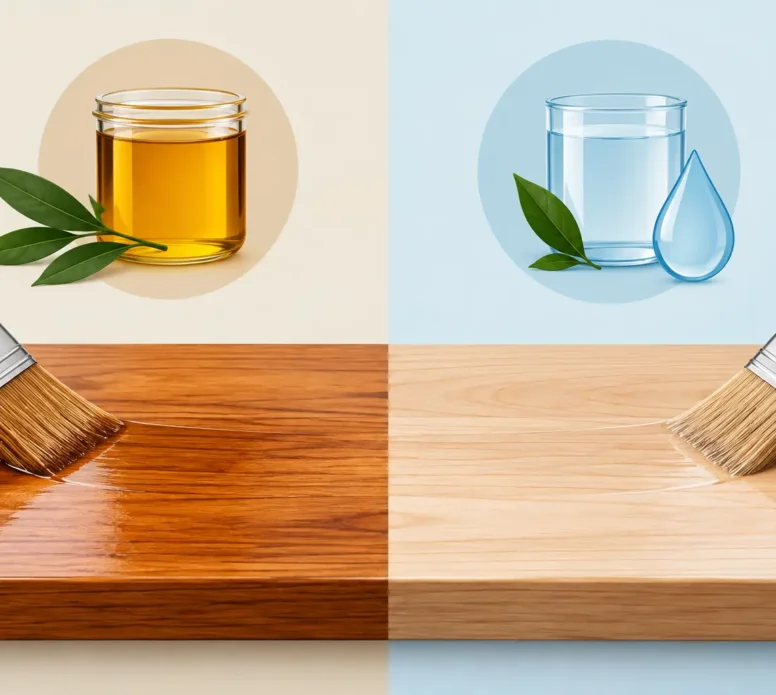
A timber deck can look tired long before the boards are beyond saving. Salt air, heavy rain, strong UV and shaded areas all take their toll around the Coffs Coast. Choosing between oil versus water timber coatings affects not only how the timber looks next week, but how it will weather, how often it needs attention and how straightforward the next maintenance coat will be.
There is no one coating that suits every timber surface. The right choice depends on the timber species, its condition, whether it is horizontal or vertical, the amount of sun and moisture it receives, and the finish you want to live with. A clear conversation before coating begins can prevent the familiar cycle of peeling finishes, patchy colour and unnecessary sanding.
Oil-based timber coatings generally penetrate into the timber fibres rather than forming a thick film over the top. They enhance the grain, leave a natural appearance and are often a sensible choice for decks, steps, handrails and exterior timber that needs regular maintenance.
Water-based timber coatings sit closer to the surface and can form a more defined protective layer. They are available in clear, tinted and more opaque finishes, dry faster and usually have less odour during application. They can work very well on cladding, doors, windows, screening and interior timber, particularly when a cleaner, more consistent finish is wanted.
Neither description tells the whole story. Product quality, correct application and surface preparation matter just as much as the base of the coating. An excellent water-based system applied to clean, dry, properly prepared timber will outperform a poorly applied oil, and the reverse is equally true.
Oil coatings suit property owners who enjoy the character of natural timber and are comfortable with planned upkeep. Because the coating soaks in, it tends to fade and wear away gradually rather than lifting in large sheets. That can make future maintenance simpler: clean the surface, address any grey or worn areas, allow it to dry fully and apply a maintenance coat as required.
This is particularly helpful on decks. Horizontal surfaces receive direct sun, rain, foot traffic, furniture movement and the occasional spill. A penetrating oil can be forgiving when a deck has small areas of wear, provided it is maintained before the timber dries out and turns grey.
Oil is not maintenance-free, however. In exposed locations, the colour can fade quickly and some products can encourage darkening or unevenness if applied too heavily. Applying more oil than the timber can absorb leaves residue on the surface, which may become sticky, attract dirt or dry with a blotchy sheen. Thin, even coats and proper wiping are essential.
An oil finish is also not always the best choice for timber that needs a highly uniform colour or strong surface-film protection. It is generally about preserving the natural look of the timber, not hiding every variation in the boards.
Oil-based coatings are commonly well suited to exterior decks, verandahs, timber stairs, pergolas and weathered hardwoods where a natural, low-build finish is preferred. They can also be a practical option where ongoing access for maintenance is easy.
Water-based systems can be an excellent choice where faster drying, reduced odour and a more refined surface appearance matter. For exterior cladding, timber doors, balustrades and screening, a water-based coating can provide a more even colour and a finish that feels less oily or absorbent to touch.
Modern water-based exterior coatings have come a long way in flexibility and UV protection. Quality products are designed to move with timber through normal expansion and contraction, but they still need the right preparation and film thickness. If moisture gets trapped beneath a coating, or if the timber is coated before it is sufficiently dry, adhesion problems can follow.
The main trade-off is what happens when the coating eventually breaks down. On a neglected surface, a film-forming water-based coating may crack, peel or flake. Restoring that failure can take more preparation than refreshing a penetrating oil, especially around edges, joins and detailed profiles. This does not make water-based coatings a poor option – it simply means they need to be selected for the surface and maintained before deterioration becomes widespread.
For indoor timber, water-based products are often especially appealing. They dry quickly, have a lower smell than traditional solvent-based options and are available in a range of clear and coloured finishes for floors, trim, doors and feature walls.
Water-based coatings are often a strong fit for timber cladding, joinery, exterior doors, window frames, screens and interior timber where a consistent finish and quicker return to use are priorities.
Coffs Harbour and surrounding coastal areas experience conditions that are hard on exterior timber. UV breaks down both timber fibres and coatings. Rain pushes moisture into unprotected end grain. Humidity can keep shaded areas damp, creating the conditions for mould and mildew. Salt carried in the air can also settle on surfaces and should be washed away as part of routine care.
A north- or west-facing deck may need more frequent attention than a protected verandah on the same property. Likewise, a dark stain can look striking but will absorb more heat than a lighter shade, increasing movement in the timber. The most suitable system is often determined by exposure, not by what looked best on a small sample board.
End grain deserves particular attention. It absorbs moisture faster than the face of a board, so cut ends, handrail ends and the bottom edges of cladding need careful sealing. Good coating work also considers drainage, ventilation beneath decks and the condition of fixings. A coating cannot solve water that is continually pooling or timber that has already started to decay.
One of the most common causes of coating failure is applying a new product over an unknown or incompatible old finish. Oil over some water-based coatings may sit on the surface rather than penetrate. A water-based coating over residual oil can struggle to bond. Even two products labelled as timber oils can behave differently.
Before any restoration, the existing surface should be assessed for peeling, chalkiness, mould, moisture damage, greying, loose fibres and previous coating type. A small test area can reveal whether the new coating wets out evenly, adheres properly and delivers the intended colour.
If a timber surface is heavily weathered, preparation may involve washing, mould treatment, sanding back degraded fibres and allowing adequate drying time. This stage is not a shortcut to be skipped. Coating over grey, contaminated or damp timber may look acceptable at first, then fail when the weather turns.
Timber preparation is less glamorous than the final coat, but it is where durability starts. Dirt, sunscreen, cooking residue, pollen and mould all interfere with adhesion. On decks, old furniture marks and worn traffic paths need to be dealt with so the new finish absorbs or bonds consistently.
Sanding should be matched to the coating system and the timber. Sanding too finely can close the grain and reduce penetration for some oils. Sanding too aggressively can leave visible marks or remove more material than necessary. Dust must then be removed carefully, including from board gaps, joints and detailed edges.
Weather timing matters too. Coating timber immediately after rain, during very humid conditions or when the surface is hot in direct sun can compromise the result. A professional approach includes checking the substrate, watching the forecast and allowing the coating to cure properly before foot traffic, furniture or regular washing resumes.
The best time to maintain timber is before it looks badly worn. Regular gentle cleaning removes salt, grime and organic growth that hold moisture against the surface. Check exposed areas after prolonged wet weather and look for fading, water absorption, rough fibres, cracking or mould.
For an oiled deck, this may mean a periodic clean and recoat of the most exposed sections rather than waiting for every board to look dry. For a water-based finish, it means washing the surface and addressing fine cracks or worn edges before water can work underneath the film.
Avoid harsh pressure cleaning at close range. It can strip fibres from timber, leave the surface fuzzy and drive water into joins. Used correctly, pressure cleaning can be useful as part of a broader restoration process, but timber needs a measured approach rather than maximum force.
A natural penetrating oil can be ideal for a well-used deck where easy refresh coats make sense. A quality water-based system may be the better long-term answer for detailed cladding or doors where an even, protective finish is the priority. The key is not choosing the trendiest label, but matching the coating to the timber, exposure and level of upkeep the property can realistically receive.
If you are unsure, start with the condition of the timber rather than the colour chart. A careful inspection and a properly prepared test area will tell you far more than a coating tin ever can – and give your timber the best chance to stay protected and attractive through many coastal seasons.