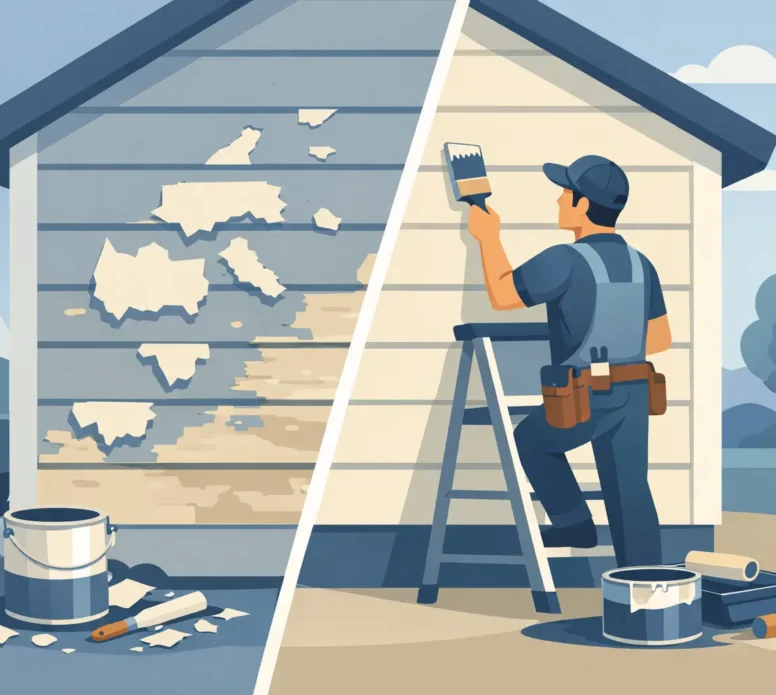
When paint starts lifting from an exterior wall, fascia, timber post or eave, it is rarely just a cosmetic problem. Peeling exterior paint can allow moisture into the surface beneath, accelerate timber deterioration and leave a property looking neglected far sooner than it should. On the Coffs Coast, salt air, strong sun, heavy rain and humidity can all put a coating system under pressure.
The good news is that peeling paint is usually fixable. The right repair, however, depends on finding out why the coating failed in the first place. Simply painting over loose edges may improve the appearance briefly, but it will not deliver the durable finish property owners expect.
Paint needs three things to last: a clean, sound surface; the right preparation; and a coating suited to the material and conditions. If any part of that system is compromised, paint can lose adhesion and begin to blister, crack, flake or peel away.
Moisture is one of the most common causes. Water may be getting in from a leaking gutter, failed flashing, cracked sealant, overflowing downpipe or poorly ventilated area. Timber can also hold moisture after prolonged wet weather. If paint is applied before the surface is dry enough, trapped moisture may later push the coating away from the substrate.
Sun exposure is another major factor. UV breaks down paint over time, particularly on exposed western-facing walls, timberwork and dark-coloured surfaces. Once the coating becomes chalky, brittle or thin, rain and dew can find their way into weak points.
Poor preparation is equally important. Paint will not bond properly to dirt, salt residue, mould, chalking paint, loose old coatings or glossy surfaces that have not been properly sanded. In coastal areas, a surface can look clean while carrying a fine layer of salt that affects adhesion.
Sometimes the issue is the previous coating system. Applying incompatible products, using the wrong primer, coating timber that has weathered too far, or painting in unsuitable heat, wind or humidity can all lead to early failure. This is why a close inspection matters before anyone reaches for a brush.
The pattern of the damage offers useful clues. Small flakes across a broad area often point to weathering, chalking or inadequate surface preparation. Larger sheets of paint lifting from timber or masonry can suggest moisture, contamination or a poor bond between coating layers.
Bubbling or blistering may indicate moisture beneath the coating, though heat can also cause it. Peeling around windows, doors, gutters and joins deserves particular attention because these are common entry points for water. On timber, soft spots, dark staining, splitting or movement may mean the problem goes beyond paint and the substrate needs repair or replacement.
Mould should not be painted over. It needs to be treated correctly and the moisture conditions that support it need to be addressed. Otherwise, it can return beneath a new coating and affect the appearance and performance of the finish.
For strata and commercial properties, repeated peeling in the same location can be a sign of a broader maintenance issue, such as drainage, building movement or water ingress. A patch repair may still be appropriate, but the underlying cause should be investigated rather than passed on to the next maintenance cycle.
A lasting repair is more involved than scraping away the obvious loose paint. The goal is to return the area to a clean, stable and paint-ready condition, then rebuild the coating system in the right order.
Before preparation starts, inspect the area for leaks, damaged gutters, gaps in sealant, failed flashing, rising damp and timber damage. If water is actively entering the building or surface, painting should wait until the issue is resolved. Fresh paint cannot act as a permanent fix for a maintenance problem.
This is also the time to consider the material. Masonry, fibre cement, weatherboards, rendered walls, steel and previously painted timber all have different preparation and priming requirements. A product that performs well on one surface may not be suitable for another.
All peeling, flaking and poorly bonded paint needs to be removed. Depending on the surface and extent of failure, this may involve scraping, sanding, pressure cleaning or other surface-preparation methods. The aim is not to strip sound paint unnecessarily. It is to remove anything that could take the new coating with it.
Feathering the edges is important. This means sanding the transition between bare areas and sound surrounding paint so the repaired section does not show as a hard ridge once coated. On older homes, this step makes a real difference to the final appearance.
Take care with older paintwork. Some older coatings may contain lead, so sanding, scraping and dust control should be handled cautiously. If there is any uncertainty, seek professional advice before creating dust or beginning extensive preparation.
After loose paint is removed, the surface must be cleaned thoroughly. Dirt, mould, mildew, salt and chalky residue all interfere with adhesion. Pressure cleaning can be useful, but it needs to be done at the right pressure and with care around aged timber, joinery and vulnerable surfaces.
Mould treatment should be followed by adequate drying time. The same applies after washing or rain. Painting a surface that feels dry is not always enough, especially with timber. Moisture can remain below the surface, so conditions and drying time need to be considered before coating begins.
Bare timber, exposed metal, repaired masonry and stained surfaces usually need a suitable primer or sealer before topcoats are applied. Priming helps create a stable bond and can prevent stains, tannins or corrosion from affecting the new finish.
This is where shortcuts often show up later. Spot-priming may be enough for isolated repairs, while widespread coating failure may call for a more extensive priming approach. It depends on how much of the surface is exposed, the condition of the existing paint and the cause of the peeling.
Exterior coatings need to be applied at the recommended spread rate and allowed to dry between coats. Painting too thinly reduces protection, while applying paint too heavily can lead to sagging, slow drying and other defects. Weather conditions matter as well. Direct hot sun, high humidity, approaching rain and strong winds can all affect the job.
For a complete repaint, colour selection is not just about looks. Dark colours can place more heat stress on exposed surfaces, particularly timber and lightweight cladding. Lighter colours may be more forgiving in harsh sun, although the best choice will depend on the substrate, elevation and overall look of the property.
A small, localised patch caused by minor impact damage can often be handled by a capable property owner, provided the surrounding paint is sound and there is no moisture issue. Preparation is still the main job. The painting itself is usually the quicker part.
Professional help is worthwhile where peeling is widespread, mould is present, surfaces are high or difficult to access, timber is deteriorated, or the cause is unclear. It is also a sensible choice for strata buildings and commercial sites where consistent presentation, safe access and minimal disruption matter.
At Harbour Painting Solutions, the focus is on assessing the surface before recommending the work. That may mean a targeted repair, a staged maintenance plan or a full exterior restoration, depending on what will protect the property properly rather than simply cover the symptom.
Regular checks can catch small issues before they become a repainting project. Keep gutters and downpipes clear, look for gaps in sealant around joinery, trim vegetation away from walls and wash down surfaces that collect salt, grime or mould. Pay close attention after extended wet weather and around shaded elevations where moisture lingers.
A well-maintained coating system protects more than the appearance of a home or building. It helps preserve the materials underneath and gives you time to address minor wear before it becomes widespread damage. If paint is peeling, treat it as useful information from the building: find the cause, prepare thoroughly, and give the surface the careful repair it needs.