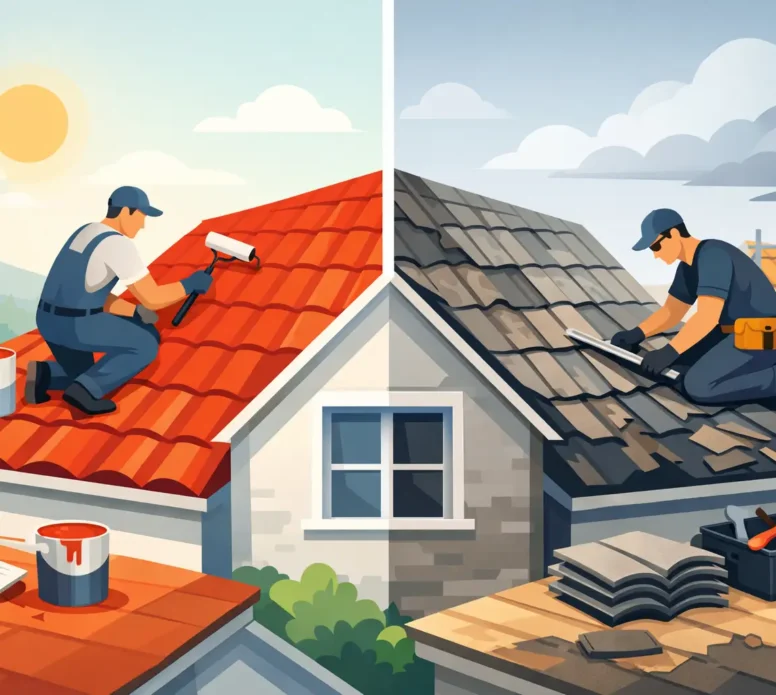
A faded roof can make an otherwise well-kept home look tired, but appearance is only part of the story. When weighing up roof painting versus restoration, the key question is not simply which finish will look better. It is whether the roof structure and surface are sound enough to paint, or whether underlying issues need to be repaired first.
For homes, units and commercial properties around Coffs Harbour, roofs work hard. Salt air, heavy rain, humidity, leaf litter and long sunny periods can all take their toll. A proper assessment helps avoid the frustrating outcome of applying a fresh coating over faults that should have been addressed first.
Roof painting is primarily a protective and cosmetic coating project. After the roof is cleaned and prepared, an appropriate primer and roof membrane or coating system is applied to improve colour, presentation and weather resistance. It can give a sound but faded roof a major visual lift.
Roof restoration is broader. It includes thorough cleaning and preparation, but also involves identifying and addressing defects before coatings are applied. Depending on the roof type and its condition, this may include replacing cracked tiles, repointing ridge capping, treating corrosion, sealing vulnerable areas, repairing flashings or attending to loose components.
The difference matters because paint is not a repair for a failing roof. Quality coatings protect a prepared surface, but they cannot fix a leak caused by damaged flashing, fractured tiles, rusted metal or failing ridge pointing.
Painting can be a sensible option when the roof is fundamentally in good condition but has lost its colour or protective finish. This is often the case with metal roofing that has light surface weathering, or tiled roofs that are structurally sound yet look dull, patchy or marked by age.
A paint-focused project may suit your property if inspections show that there are no active leaks, no widespread corrosion, no significant tile damage and no loose or deteriorated roof components. Preparation is still essential. The roof needs to be properly cleaned, surface contaminants removed and any minor preparation items dealt with before coating begins.
For many homeowners, the visual change is a big part of the appeal. A refreshed roof colour can bring together new exterior paint, updated gutters or restored timber features. For landlords, strata committees and commercial property owners, it can also improve presentation without undertaking repair work that is not yet required.
That said, a roof should never be painted just because it looks faded from the ground. What appears to be simple discolouration may be mould, lichen growth, oxidisation, coating breakdown or early corrosion. Each calls for a different preparation approach.
Restoration is generally the better path when signs of wear go beyond the existing coating. A roof may need more than paint if there are broken or slipped tiles, cracked bedding, crumbling pointing, rust patches, deteriorated screws, damaged flashings or evidence of water entering the roof space.
On tiled roofs, ridge capping is a common area of concern. The bedding and pointing around ridge tiles help hold them securely and protect the roof from water intrusion. When these materials crack, lift or break down, repainting alone may make the roof look improved while leaving the real issue in place.
Metal roofs need equally careful assessment. Small rust spots can sometimes be treated successfully when identified early, but advanced corrosion may reduce the integrity of the sheet itself. Loose fasteners, perished washers and failing lap joints can also allow water into places it should not be. These faults need to be addressed as part of the restoration process, not hidden beneath a coating.
A full restoration is usually the more responsible choice when the roof is a major part of a property maintenance plan. For strata properties, this is particularly relevant. A shared roof affects multiple owners and tenants, so documenting its condition, planning repairs and using a methodical process can prevent small defects from becoming larger disruptions.
Coffs Harbour and the surrounding coastal region create conditions that are hard on exterior surfaces. Moisture supports mould, algae and lichen growth. Salt carried in the air can accelerate corrosion on exposed metal. Intense ultraviolet exposure gradually breaks down coatings, while storms can reveal weaknesses around flashings, valleys and ridge capping.
This does not mean every coastal roof needs restoration. It does mean that preparation and product selection should match the building’s exposure and roof material. A sheltered home may need a different approach from a hilltop property that receives strong wind and driving rain, or a building close to the coastline.
Cleaning is not a cosmetic shortcut in this environment. It is a critical part of the job. Contaminants left on the surface can interfere with coating adhesion, and organic growth may quickly return if its cause is not understood. Good roof work begins with careful inspection, safe access and thorough preparation.
The best decision is based on the roof’s actual condition, rather than its age alone. Two roofs installed in the same year can have very different maintenance needs because of exposure, previous workmanship, surrounding trees and drainage.
A professional assessment should look at the roof material, existing coating condition, signs of water entry, flashings, gutters, valleys, fixings and roof penetrations. On tile roofs, it should include a close look at cracked tiles and ridge capping. On metal roofs, it should consider corrosion, sheet condition, screw lines and joints.
It is also useful to consider what is happening around the roof. Overhanging branches can deposit leaf litter and keep sections damp. Blocked gutters and valleys can cause water to back up. Mould on soffits, eaves or ceiling areas may point to moisture issues that deserve closer attention before any painting work is scheduled.
For property owners, clear communication is just as valuable as the technical findings. You should understand what needs repair now, what can be monitored and what the coating system is intended to achieve. A detailed scope reduces surprises and helps you compare the value of painting against restoration on a like-for-like basis.
Whether the project is roof painting or restoration, surface preparation is where durable results are made. A coating is only as dependable as the surface beneath it.
Preparation can involve pressure cleaning, mould treatment, removal of loose or failing coatings, rust treatment, repairs, sealing and priming where required. The exact sequence depends on the roof material and condition. Skipping steps may save time at the start, but it can lead to peeling, patchiness or premature coating failure later.
Care also needs to be taken with surrounding areas. Roof work can affect solar panels, gutters, downpipes, gardens, driveways and neighbouring access. An organised contractor plans the worksite, protects adjoining surfaces where needed and leaves the property tidy once the project is complete.
If your roof is sound, watertight and simply looks worn, painting may be an effective way to refresh its appearance and add a protective finish. If there are defects, recurring leaks or signs that components are deteriorating, restoration should come first.
There are also situations in between. A roof may only need targeted repairs and preparation before painting, rather than a more extensive restoration. This is why a one-size-fits-all answer rarely serves property owners well. The right scope should reflect the roof in front of you, not a standard package.
A well-maintained roof protects more than the view from the street. It helps look after the structure beneath it, supports the presentation of the whole property and gives you confidence when the next run of wet weather arrives. Start with a close inspection, ask practical questions about preparation and repairs, and choose the approach that gives your roof the care it genuinely needs.