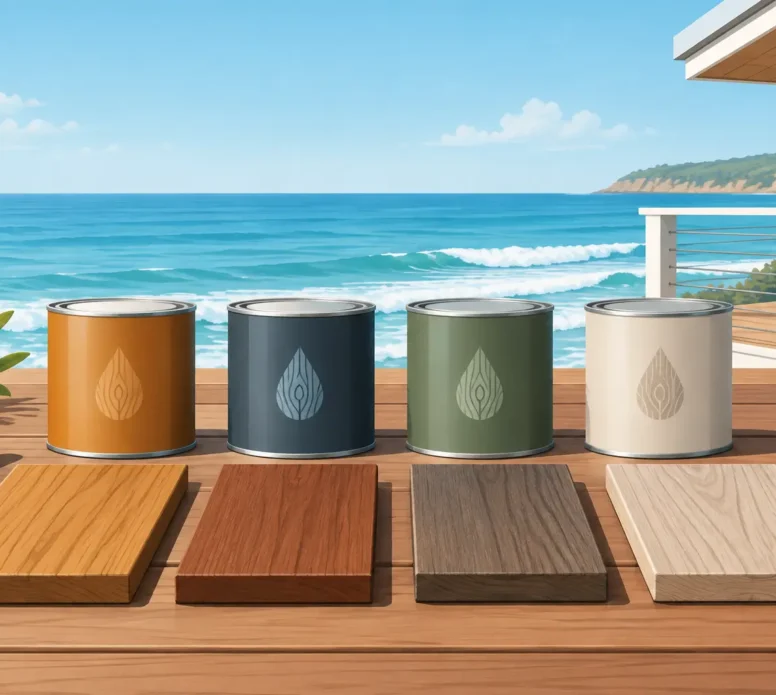
A timber deck can look tired long before the boards have reached the end of their useful life. On the Coffs Coast, strong sun, salty air, rain and humidity all work on exposed timber, often leaving it grey, patchy or prone to mildew. This deck oil comparison helps you look beyond the tin and choose a finish that suits your deck’s timber, condition and exposure.
Deck oil is designed to soak into timber rather than sit as a thick coating on top. That penetrating action helps reduce moisture movement while bringing out the grain and natural colour of the boards. It is a practical choice for decks because it generally wears away gradually, rather than peeling in large sheets like an unsuitable film-forming coating can.
That does not mean every product labelled as a deck oil will perform in the same way. Formulas vary in the oils, resins, pigments and water-repellent ingredients they contain. Some are made for a natural, low-sheen appearance, while others offer stronger colour and UV protection. The best option depends on whether the deck is fully exposed, partly covered, close to the coast, regularly wet, or simply in need of a restorative refresh.
A dark-coloured oil, for example, may offer better protection from UV but can show dust, pollen and scuff marks more readily. A clear or lightly tinted finish can look beautifully natural, yet it may need more frequent attention on a deck that faces harsh afternoon sun.
The most common decision is between water-based and oil-based deck oils. Both can produce an attractive, durable result when they are applied to properly prepared timber. Neither is automatically the right choice for every property.
Water-based deck oils are often chosen for their lower odour, easier clean-up and relatively quick drying times. For households that want to use their outdoor area again sooner, this can be a real advantage. Many modern water-based products also hold colour well and are available in a useful range of timber tones.
They can be particularly suitable for well-maintained decks where the boards are clean, dry and sound. Because they dry quickly, however, application needs to be organised. Working too slowly across a large area or stopping midway through a board can leave lap marks or uneven colour. Hot, windy weather can make this more challenging.
Water-based products can also create a more even-looking finish on some timbers, especially when a coloured stain is selected. The trade-off is that poorly prepared boards, leftover coating residue or inconsistent absorption can still show through. The oil will not hide surface defects.
Traditional oil-based deck oils tend to have a longer working time, which can make it easier to maintain a wet edge while applying the product. They often enrich the timber with a deeper, warmer appearance and can be very forgiving on older hardwood boards that absorb unevenly.
For weathered decks, an oil-based finish may penetrate effectively once the surface has been thoroughly cleaned and allowed to dry. It can be a good fit for hardwoods commonly used in Australian decking, but the product still needs to match the timber species and any existing finish.
The practical considerations are longer drying times, stronger odour and more involved clean-up. A deck must stay protected from rain, leaves and foot traffic while the oil cures. On a humid coastal day, drying can take longer than expected, so timing the work around the weather is part of achieving a tidy finish.
Before choosing a deck oil, assess what is actually underfoot. New timber, grey weathered timber, previously coated boards and timber affected by mould each need a different approach.
Dense hardwoods such as spotted gum, blackbutt and merbau may need adequate weathering or careful preparation before they will absorb a finish evenly. Natural oils and tannins in some species can affect adhesion and colour. Softer timbers can take up oil quickly and may need a lighter application to avoid an overly saturated surface.
If the deck has an existing coating, check whether it is still sound. A penetrating deck oil may not absorb properly through a previous film-forming stain, varnish or paint. Applying a new product over an incompatible coating is one of the main reasons decks end up blotchy, sticky or prematurely worn.
Mould and algae deserve particular attention in shaded, damp areas. Oiling over biological growth will not solve the problem. The timber needs to be treated, cleaned and dried properly, while nearby drainage, vegetation and airflow should also be considered. A beautiful finish will not last if the underlying moisture issue remains.
Most disappointing deck oil results can be traced back to preparation, not the choice between water- and oil-based products. A deck should be cleared of furniture and pots, then inspected for loose fasteners, damaged boards, splinters and raised grain. Repairs are easier before a fresh coating is applied.
Cleaning removes built-up dirt, old oil residue, mould spores and contaminants that prevent even absorption. Pressure cleaning can be effective when handled with care, but excessive pressure or working too close to the boards can furrow soft timber and leave a rough, fuzzy surface. The aim is to clean the timber, not strip its fibres away.
Where the boards are grey, uneven or carrying stubborn remnants of old finishes, sanding may be needed. Sanding also helps remove splinters and creates a more consistent surface for the oil. It needs to be followed by thorough dust removal. Any dust left between boards or across the grain can spoil the final appearance.
Most importantly, timber must be dry before oiling. Surface dryness is not always enough after rain, pressure cleaning or a humid spell. Moisture held within the boards can interfere with penetration and slow curing. Allowing proper drying time is one of those less visible steps that protects the quality of the completed job.
Natural-look finishes remain popular because they let the timber grain do the work. However, on a fully exposed deck, some level of pigment is usually more practical than a completely clear finish. Pigment helps filter UV, which slows down the bleaching and weathering caused by direct sunlight.
A light natural tone can suit contemporary homes and keep the deck visually open, while mid-brown shades can add warmth and help blend newer replacement boards with older timber. Very dark colours can look striking but absorb more heat and may make wear more obvious in high-traffic paths. They also demand more careful, even application.
Sheen should be considered with safety and maintenance in mind. A low-sheen, penetrating finish is often a sensible choice for external timber because it looks natural and is easier to refresh. No deck coating can make wet timber completely slip-proof, particularly where leaves, algae or shade are involved. Regular cleaning is still essential.
There is no fixed timetable that suits every deck. A covered verandah may only need periodic cleaning and a maintenance coat after several seasons, while a poolside or north-facing deck can need attention much sooner. Foot traffic, weather exposure, tree cover and the depth of colour all make a difference.
Instead of waiting for the deck to look completely grey, watch for early signs that water is soaking in quickly, colour is fading unevenly, or the boards feel dry and rough. A maintenance coat applied at the right time is usually simpler than a full restoration after the timber has been neglected.
Keep the deck clear of leaf litter, move pot plants occasionally, sweep away grit and rinse off salt residue where appropriate. These small habits reduce staining and help prevent damp patches from developing beneath furniture and outdoor rugs.
A straightforward maintenance coat can be manageable on a small, well-kept deck. Restoration is more involved when there is widespread mould, flaking old coatings, damaged boards, deep weathering or uncertainty about which product was used previously. Those situations call for a careful assessment before any coating is selected.
A professional approach considers preparation, timber repairs, weather conditions, coating compatibility and the way the deck connects with the rest of the property. At Harbour Painting Solutions, that attention to detail helps ensure the worksite stays tidy and the finish is built to last, not simply look good on day one.
A deck should feel like an easy place to spend time. Give the timber the preparation and protection it needs, and it will keep adding warmth and value to your outdoor living area season after season.