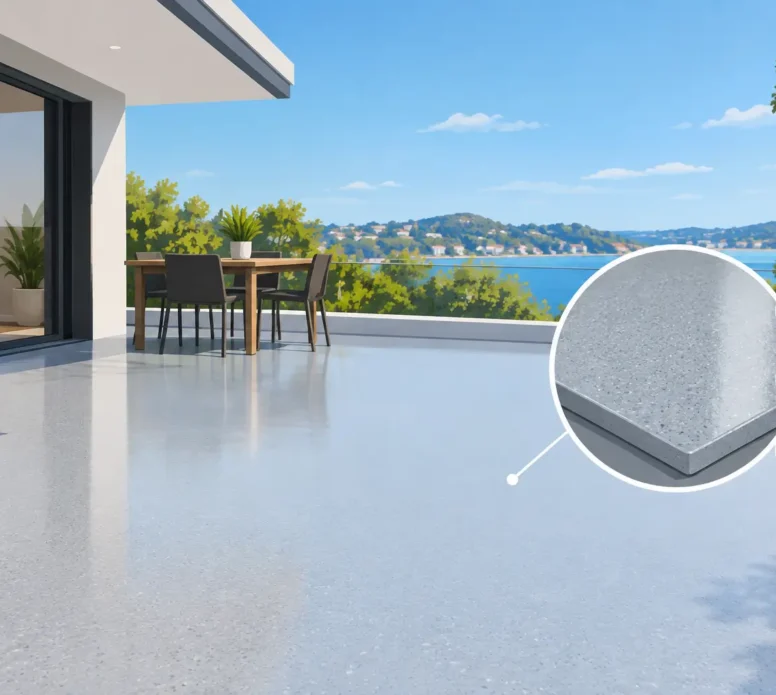
A glossy epoxy floor can look excellent when it is first laid, but an exposed outdoor surface in Coffs Harbour has a much tougher job than an indoor garage. Strong sun, salt air, regular rain and moisture rising through concrete all affect how a coating performs. So, is epoxy suitable outdoors? Sometimes, but usually not as the final exposed surface on its own.
Epoxy remains a valuable part of many exterior coating systems because it bonds strongly, helps protect concrete and can build a hard, attractive finish. The key is matching the product system to the location, the condition of the slab and the level of weather exposure. A coating that works beautifully under a covered patio may be the wrong choice for an open driveway.
Standard epoxy is generally best treated as an interior coating or as a base coat that needs further protection outside. Its main weakness is ultraviolet light. Over time, direct sun can cause epoxy to yellow, fade or develop a chalky appearance. The coating may still be adhered to the concrete, but it no longer looks clean and freshly finished.
That does not make epoxy a poor product. It simply means it has a particular role. In a protected outdoor area, such as an enclosed verandah, sheltered entry or covered entertaining space, an epoxy system can be a practical option. In a fully exposed setting, a UV-stable topcoat is normally needed to protect the epoxy beneath it.
For many projects, the lasting solution is a coating system rather than one product. This may include suitable concrete preparation, an epoxy primer or build coat, and a UV-resistant polyurethane or polyaspartic topcoat. The right combination depends on the surface and how it is used.
Sunlight is a major consideration on the NSW coast. Clear finishes and pale decorative colours can make UV changes especially noticeable, while darker colours can become hot underfoot and may show fading sooner.
A quality UV-stable topcoat is designed to retain its colour and finish better in direct sunlight. It also protects the epoxy layer from weathering. This does not mean the surface will never need maintenance, particularly in harsh coastal conditions, but it gives the coating a much better chance of ageing evenly.
Shade changes the equation. A courtyard that only receives early morning light has different needs to a west-facing driveway that takes full afternoon sun every day. When assessing an outdoor surface, we look beyond the area itself and consider its orientation, surrounding trees, rooflines and the way water moves through the property.
Concrete expands and contracts with temperature changes. Exterior slabs also tend to have control joints, cracks and movement points that need to be addressed properly. A hard coating placed over an active crack without preparation can crack in the same place.
No coating can stop a slab from moving. Good preparation identifies whether cracking is cosmetic, stable or likely to keep moving, then allows for the appropriate repair or joint treatment. This is one reason a close inspection is more useful than choosing a product by appearance alone.
Epoxy needs a clean, sound and suitably profiled surface to bond well. Painting over dusty concrete, old flaking sealer, tyre residue or a damp slab is a shortcut that can lead to peeling, blistering or patchy adhesion.
Outdoor concrete often has more hidden issues than it first appears. Driveways can carry oils and vehicle contaminants. Pool surrounds may have sunscreen residue, salt and previous coating layers. Paths and patios can develop mould, algae and surface erosion, particularly on shaded sides of a home.
Preparation may involve pressure cleaning, degreasing, mechanical grinding, repairs and moisture testing. The aim is not simply to make concrete look clean. It is to create a stable surface that will accept the chosen coating system.
Moisture deserves particular attention. Rainwater can enter through cracks and edges, while moisture vapour can rise from below the slab. If a coating is applied when the concrete is too damp, or when there is an ongoing moisture issue, pressure beneath the coating can cause bubbling or delamination later.
A new concrete slab should be allowed to cure fully before coating. Rushing this stage can trap moisture and compromise adhesion. The slab should also be checked for curing compounds, which can sit on the surface and prevent coatings from bonding unless they are removed correctly.
Epoxy can be a sensible choice for protected exterior-adjacent areas where its hard-wearing finish is useful and direct weather exposure is limited. Covered patios, enclosed balconies, breezeways, workshop thresholds and protected outdoor entertaining areas are common examples.
It can also be used as part of a layered system on exposed concrete. In this case, the epoxy may provide adhesion and build, while a compatible UV-resistant topcoat takes the weather. Decorative flakes can be incorporated where a textured, easy-care finish suits the space.
The result should suit the way the area is used. A patio needs to feel comfortable underfoot and be easy to clean. A commercial entry needs to handle regular foot traffic. A driveway has to cope with vehicle weight, turning tyres, heat and contaminants. These are different jobs, even though they all involve concrete.
For open driveways, exposed paths and large concrete areas, a purpose-designed exterior concrete coating or sealer is often a more practical choice than a conventional epoxy finish. The best option depends on whether the priority is colour improvement, stain resistance, dust reduction, easier cleaning or a more natural concrete appearance.
Driveways are particularly demanding. Hot tyres can place stress on coatings, while turning wheels create shear forces that are not common on a garage floor. Water pooling at the bottom of a driveway, shaded sections with algae growth and frequent coastal rain add further challenges.
A driveway sealer or specialised exterior coating can be selected around those conditions. The surface still needs thorough cleaning and repairs, but the finish is better suited to open-air exposure and ongoing maintenance.
Pool surrounds also need careful product selection. Slip resistance matters, especially when bare feet, water and sunscreen are involved. A high-gloss smooth coating may look appealing in photos but can be unsuitable around wet areas. Fine aggregate or a textured additive can improve grip without making the surface difficult to maintain.
The colour and sheen of an exterior floor coating affect more than appearance. Dark colours absorb heat, which can make a sunny patio uncomfortable and increase stress on the coating. Very light colours can show red dirt, leaf stains and tyre marks. High-gloss finishes reflect light well but tend to highlight surface imperfections and can be slippery when wet if no anti-slip measure is included.
A satin or low-sheen finish is often a practical middle ground outdoors. It can look tidy while being more forgiving of everyday dust, water spotting and surface variation. The ideal colour should also work with the home’s exterior paint, roof tones and surrounding landscaping.
For strata and commercial properties, consistency matters as well. A coating system should support a professional presentation while allowing sensible maintenance and clear repair options if a localised area is damaged.
Even the right product can fail if it is applied in unsuitable weather. Exterior coating work needs dry conditions, acceptable surface temperatures and enough time for the system to cure before rain, heavy use or vehicle traffic.
On the Coffs Coast, weather planning is part of the work. Humidity, afternoon showers and cool overnight temperatures can affect curing windows. A professional application schedule allows for cleaning, preparation, repairs, coating stages and cure times rather than treating the job as a quick weekend paint-up.
Careful masking and tidy site practices matter too. Concrete coating preparation can create dust, and adjacent walls, doors, gardens and drains need protection. A well-managed job leaves the space ready to use, not surrounded by residue and loose materials.
If an outdoor epoxy surface has yellowed or gone chalky but remains firmly bonded, it may be possible to clean, abrade and recoat it with a compatible UV-stable finish. If it is peeling, bubbling or lifting in several places, the cause needs to be investigated before recoating.
Simply applying another layer over a failing coating rarely solves the underlying problem. Moisture, poor original preparation, incompatible products or concrete contamination can all need to be addressed first. Removing failed material may take more work, but it gives the new system a sound foundation.
The best outdoor finish is the one that suits the exposure, the slab and the way your property operates. For a covered entertaining area, epoxy may be an excellent part of the answer. For open concrete in full sun and rain, a UV-stable exterior system will usually provide a better-looking result over time. A careful on-site assessment helps turn that choice into a surface you can enjoy, clean and maintain with confidence.