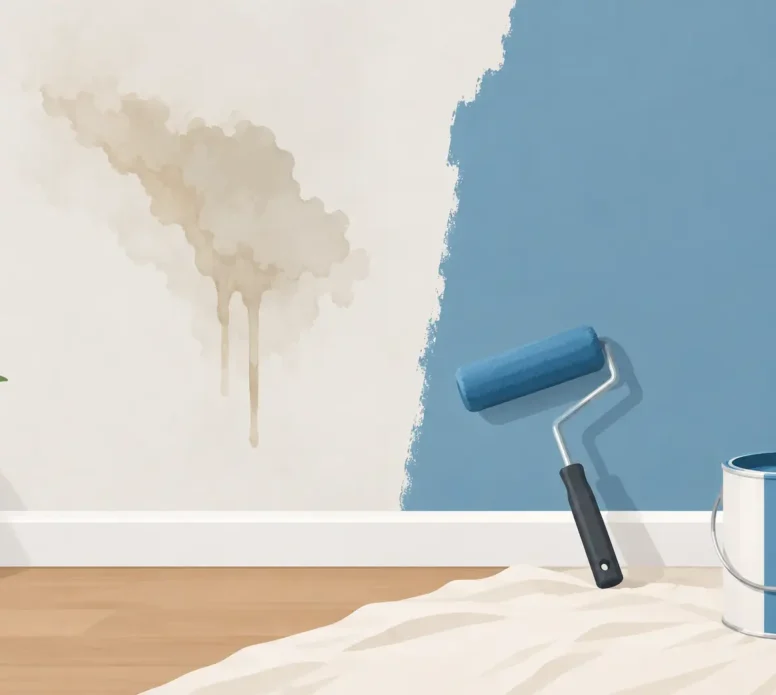
A brown ring on the ceiling after heavy rain, a yellow patch beside a window or a tide mark below an old plumbing leak can make an otherwise tidy room feel neglected. So, can paint cover water stains? It can, but ordinary paint alone is rarely the right answer. Unless the moisture source is fixed and the stain is properly sealed, it may bleed back through a fresh coat – sometimes within days.
Water staining is not simply a painting issue. It is evidence that water has travelled where it should not, and the best repair protects both the appearance of the room and the surface underneath. A careful process takes a little longer, but it avoids the frustrating cycle of repainting the same patch again.
Standard ceiling or wall paint may make a water stain look better initially, particularly if the mark is faint. However, most water stains contain discolouration from tannins in timber, rust, old contaminants or minerals left behind as the water dries. Those particles can migrate through water-based paint and reappear as yellow, brown or grey shadows.
A stain-blocking primer is designed to lock that discolouration in before the finish coats go on. For many interior stains, an appropriate oil-based or shellac-based stain blocker gives the most reliable result. The right product depends on the surface, the severity of the staining and whether there is any remaining odour, mould or contamination.
This is why painting directly over a mark is a gamble. A quick coat can seem like the easy fix, but if the stain returns, the room may need further preparation and repainting anyway. Proper sealing is the small step that makes a repaired area blend in and stay that way.
Before anyone sands, primes or paints, the source of the water needs to be identified and repaired. In Coffs Harbour and surrounding coastal areas, water staining can be caused by wind-driven rain, roof leaks, failed flashing, blocked gutters, leaking hot-water systems, plumbing faults, cracked tiles, shower waterproofing issues or condensation in poorly ventilated rooms.
The location of the mark can offer a clue, though it is not always conclusive. A ceiling stain below a roofline may point to roofing, guttering or flashing. A mark below a bathroom, laundry or kitchen could be connected to a pipe, drain or waterproofing failure. Staining around windows is often associated with failed seals, exterior cladding details or water getting in during driving rain.
Water can travel along framing, pipes and plasterboard before it becomes visible. The stain is not necessarily directly below the entry point. Where the cause is unclear, it is sensible to have the relevant trade assess it before cosmetic repairs begin.
A repaired leak also needs time to dry fully. Painting over damp plasterboard, timber or masonry can trap moisture and lead to peeling, bubbling, mould growth or further discolouration. Moisture testing is particularly worthwhile after a significant leak or flood, where the surface may look dry while the material behind it is not.
Not every water stain involves mould, but water damage creates the conditions mould needs to grow. Look for dark spotting, fuzzy growth, a musty smell, soft plasterboard, lifting paint, swollen trim or sagging ceiling sections. These signs call for more than a coat of paint.
Small, isolated areas of surface mould may be treatable with suitable cleaning and safe preparation once the moisture issue is resolved. Larger areas, recurring growth or mould associated with water-damaged building materials should be assessed carefully. The affected material may need remediation or replacement, especially where plasterboard has softened, bowed or lost its integrity.
Do not dry-sand mouldy or badly contaminated surfaces. That can spread spores through the room and leave a bigger clean-up job. Safe containment, appropriate cleaning methods and thorough drying matter as much as the final paint finish.
A lasting repair follows a straightforward sequence, although the details change from one property to the next.
First, the source of moisture is repaired and the area is allowed to dry. The stained surface is then inspected for damage, mould, loose paint and softened materials. Any compromised plasterboard, cornice, timber or ceiling lining should be repaired or replaced rather than painted over.
Next comes cleaning and preparation. Flaking paint is removed, loose edges are feathered back and minor dents, cracks or repairs are filled. Once dry, the repaired section is sanded to create an even surface. Dust is removed carefully so the primer can bond properly.
A stain-blocking primer is then applied to the affected area. Deep stains sometimes need a second coat, and it is wise to check that the discolouration is fully sealed before applying the topcoat. Skipping this check is one of the main reasons stains reappear through newly painted ceilings.
Finally, the area is painted with compatible finish coats. On a ceiling, repainting only the repaired patch can leave a visible difference in sheen or colour, even when the paint colour is matched closely. For the cleanest result, it is often better to paint the full ceiling plane from edge to edge. The same can apply to walls with older paint that has faded or changed slightly over time.
There is no single primer that suits every water stain. A professional will consider the type of surface, whether the stain is active or old, the level of contamination and the paint system already in place.
Water-based stain blockers can work well for light, dry staining and are lower in odour. Oil-based and shellac-based products are often more effective on stubborn yellow-brown marks, smoke residue, tannin bleed and water damage. They can require more care during application and ventilation, so the product choice should suit the room and its occupants.
For bathrooms, laundries and other moisture-prone areas, the finish coat also needs to be appropriate for the environment. A quality washable paint formulated for wet areas is a practical choice, but it is not a substitute for ventilation. Exhaust fans need to vent effectively, and regular condensation should be addressed before it begins staining ceilings again.
Some stains are minor and can be repaired once the cause is sorted. Others are a signal to pause. Seek further assessment if a ceiling is bulging or sagging, if staining continues to spread, if paint bubbles repeatedly, if there is a persistent musty odour, or if water has affected electrical fittings.
A sudden wet patch after a storm or a plumbing leak should be treated promptly. Move furniture and belongings away from the area, avoid using affected electrical points and arrange for the leak to be made safe. Once the building is dry and any damaged materials are dealt with, the painting repair can be completed with confidence.
For strata properties and commercial premises, early action is especially helpful. A stain may originate from a common roof, balcony, pipework or neighbouring lot, so documenting the location and timing can help the responsible parties investigate before cosmetic work begins.
The visible mark is usually the final stage of a moisture problem, not the first. Treating it with care protects the finish, helps prevent mould and gives you a clearer picture of your property’s condition.
At Harbour Painting Solutions, we approach stained surfaces with that in mind: identify what needs attention, prepare thoroughly and use a coating system suited to the job. A clean, even ceiling or wall is satisfying, but the real peace of mind comes from knowing the repair was not just painted over.