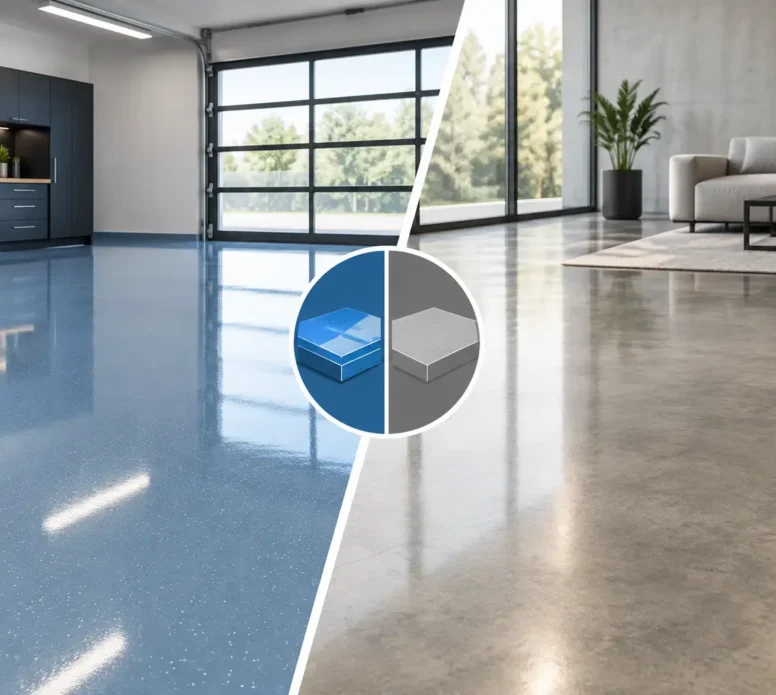
A garage floor that is hard to keep clean, a shop floor that looks tired, or a concrete slab with stubborn stains can change how an entire property feels. When comparing epoxy versus polished concrete, the right answer is rarely about which finish looks best in a photo. It comes down to how the space is used, the condition of the slab underneath, and the level of maintenance you are comfortable with over time.
Both options can turn plain concrete into a practical, professional-looking surface. They do it in very different ways, however. One is a protective coating applied over the slab; the other refines and densifies the slab itself.
Epoxy flooring is a multi-layer coating system applied to prepared concrete. Depending on the finish selected, it can be smooth, coloured, decorative, flecked or finished with a slip-resistant texture. Its main job is to create a protective surface over the concrete, helping it resist staining, tyre marks, dust and day-to-day wear.
Polished concrete is the existing concrete slab mechanically ground, honed and polished to achieve the desired level of sheen. A densifier is generally used to strengthen the surface, followed by a protective treatment. Rather than covering the concrete, polishing brings out its natural variation, aggregate and character.
That distinction matters. Epoxy can provide a more uniform, deliberately designed appearance. Polished concrete tends to celebrate the slab beneath it, including its movement, markings and variation. A polished floor can look strikingly refined, but it will not hide a poor-quality or heavily patched slab in the same way a coating system can.
For homeowners and commercial property operators wanting a crisp, controlled finish, epoxy often offers more creative flexibility. Solid colours can make a garage, workshop or storeroom feel brighter and cleaner. Decorative flakes can add texture and help disguise everyday dust, while a clear topcoat gives the system its finished appearance.
Polished concrete suits spaces where an architectural, understated look is the goal. It works particularly well in modern interiors, showrooms, cafes and homes where concrete is intended to be part of the design. The final appearance depends heavily on the original slab. Some floors reveal attractive aggregate; others show trowel marks, repairs or colour variation.
Neither look is automatically better. If you prefer consistency and want to choose the colour and finish, epoxy is usually the more predictable option. If you appreciate a natural material with individual character, polished concrete may be a better fit.
A quality epoxy floor is tough, but it is not simply a matter of rolling paint onto concrete. The slab needs thorough mechanical preparation so the coating can bond properly. Cracks, weak concrete, oil contamination and moisture issues need to be assessed before any epoxy is applied. Skipping this stage is one of the main reasons coatings peel, bubble or wear unevenly.
When the surface is properly prepared and the system matches the environment, epoxy performs well in garages, workshops, utility areas, retail back-of-house spaces and commercial settings. It is particularly useful where spills are likely, as the protective coating can make cleaning easier. Heavy point loads, sharp impacts and dragging equipment can still damage any floor, so the expected traffic should guide the coating specification.
Polished concrete is also highly durable because it uses the concrete slab as the finished surface. It does not delaminate like a coating can, but it is not indestructible. Existing cracks remain part of the floor and new movement in the slab may still create cracks over time. Polished concrete can also be susceptible to staining from oils, wine, acids and other spills if they are left sitting on the surface.
For coastal properties around Coffs Harbour, moisture assessment deserves close attention. Concrete can hold moisture even when it looks dry on top. This is particularly relevant for epoxy, as excess moisture vapour can affect adhesion. A professional assessment before preparation helps avoid choosing a finish that is unsuitable for the slab.
Both floors are lower maintenance than bare concrete, which tends to create dust and absorb stains. The daily routine is straightforward: sweep or vacuum loose grit, then mop using a suitable cleaner. Sand and dirt can act like abrasive paper under shoes and tyres, so regular cleaning helps retain the finish.
Epoxy is generally the easier option for spaces exposed to vehicle drips, muddy footwear or regular workshop mess. Its non-porous surface makes spills easier to wipe up, provided the coating remains in good condition. Avoid harsh or unsuitable cleaning products, as they can dull the topcoat over time.
Polished concrete is also easy to maintain, though it benefits from pH-neutral cleaning products and prompt attention to spills. A polished floor may need periodic reapplication of protective treatments, particularly in busy commercial areas. The level of sheen can also reduce gradually with heavy traffic, although professional maintenance can restore the appearance.
A highly glossy finish of either type will show dust, footprints and water marks more readily than a lower-sheen or textured surface. This is worth considering before choosing a finish for an entrance, family home or business with frequent foot traffic.
A smooth floor can become slippery when wet, regardless of whether it is epoxy or polished concrete. This does not mean either option is unsuitable, but the area’s use needs to be considered from the start.
For garages, workshops, commercial entrances, pool-adjacent spaces and areas where wet shoes are common, a slip-resistant additive or a more textured finish may be appropriate. With epoxy, texture can be incorporated into the system. With polished concrete, the degree of polish and chosen treatment influence the feel underfoot.
More texture usually improves grip, but it can make cleaning slightly more involved. The best outcome is a finish that balances safety, appearance and practical upkeep rather than selecting the shiniest sample available.
Epoxy is often the practical choice for a garage, workshop, storage area or commercial workspace where a cleanable, protective surface is the priority. It can cover visual inconsistency in an existing slab and offers far more colour options. It is also useful where you want a distinct finish that supports the presentation of the space.
Polished concrete is often better suited to internal living areas, retail floors, showrooms and spaces where the natural concrete look is part of the design. It is most successful when the slab is sound, well laid and suitable for grinding. If the floor has extensive patching, coatings or major surface defects, polishing may reveal more than you would like.
There are exceptions. A premium epoxy system can look excellent in a retail environment, while honed concrete can be a practical option for some garages and covered outdoor areas. The existing substrate and the way the room will be used matter more than a simple residential-versus-commercial rule.
Both finishes require planning because surface preparation creates dust, noise and restricted access. Professional teams use suitable equipment and containment practices, but the work area still needs to be cleared and kept separate while the floor is being prepared and finished.
Epoxy installation involves preparing the concrete, repairing areas as required, applying the coating layers and allowing adequate curing time before foot traffic or vehicles return. The exact programme depends on the chosen system, weather conditions and the slab condition.
Polished concrete requires progressive grinding and polishing passes, with repairs addressed along the way. It can be a more involved process when removing old coatings, levelling uneven areas or exposing aggregate. A site inspection is the sensible starting point for either option, especially in older homes, strata properties and commercial premises where access and scheduling need to be carefully coordinated.
The best floor finish is one that suits the building, not just the mood board. Before choosing between epoxy and polished concrete, look closely at the slab’s condition, moisture levels, traffic, cleaning demands, desired appearance and safety requirements. A well-prepared surface is what gives either finish the durability and presentation property owners expect.
For a floor that will be used hard and seen every day, it is worth getting clear advice before work begins. The right system should make the space easier to live or work in, while giving your property a finish you will still be pleased to see years from now.