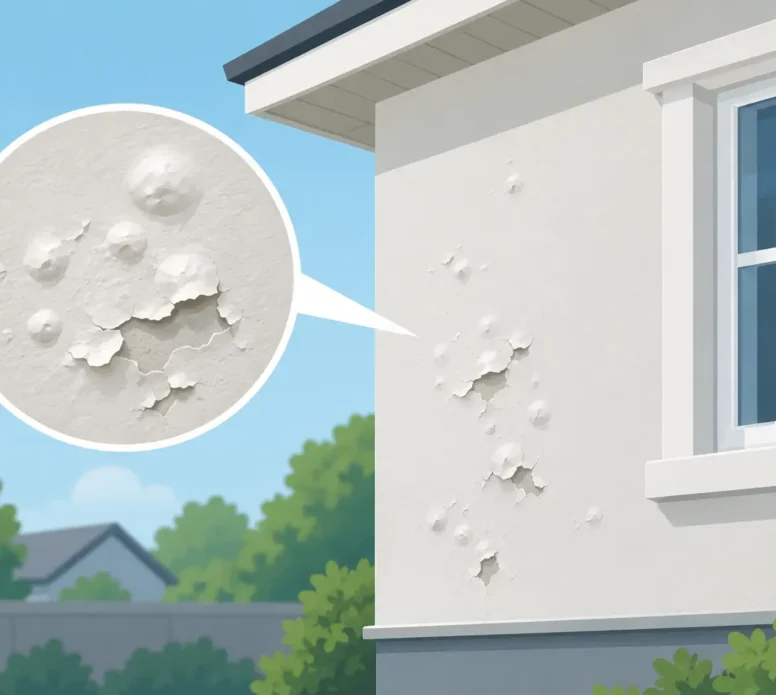
A few raised bubbles in painted walls, eaves or timberwork can look like a small cosmetic issue. But when homeowners ask what causes paint blistering, the answer is usually that the coating has lost its bond with the surface beneath it. Painting over those bubbles may hide them briefly, yet the problem often returns unless the underlying cause is found and fixed.
On the Coffs Coast, painted surfaces work hard. Heat, humidity, driving rain, salt air and mould can all affect how well a coating performs. A proper repair starts with more than scraping and repainting. It starts with understanding what the paint is telling you.
Paint blistering happens when paint lifts away from the surface or from an earlier layer of paint, forming bubbles or blisters. Some are firm and dry, while others feel soft or contain moisture. The location, timing and condition of the surface provide useful clues.
Moisture is the most common cause, but it is not the only one. Excessive heat, poor surface preparation, incompatible coatings and painting in unsuitable conditions can all contribute. In many cases, several factors are working together.
Water is the usual suspect when blisters appear on exterior walls, window frames, eaves, bathrooms or ceilings. Rain can enter through failed sealant, cracks, damaged flashing, blocked gutters or gaps around windows. Moisture may also travel through masonry or timber from the rear of the surface.
Once trapped, water vapour pushes against the paint film. As the surface warms, that pressure can lift the coating and create a blister. This is why a freshly painted area can look sound at first, then bubble after a spell of hot weather or heavy rain.
Indoor blisters deserve the same attention. Bathroom walls and ceilings often blister where ventilation is poor, while a patchy ceiling may point to a roof leak, plumbing issue or condensation in the roof space. Repainting without dealing with the source of water risks further damage to plaster, timber or framing.
A surface does not need to look wet to hold enough moisture to cause trouble. Timber after rain, masonry after pressure cleaning, or a shaded wall following a humid week can retain moisture below the surface. Applying paint too soon can trap it in.
Drying time depends on the material, weather, ventilation and extent of cleaning. Coastal humidity can slow this process considerably. A dependable painting job allows for the conditions on site rather than relying only on the calendar.
Blisters that develop soon after painting on a sun-exposed wall may be caused by heat. When paint is applied to a very hot surface, the top layer can skin over before solvents or moisture below have had time to escape. The expanding vapour then forms bubbles.
Dark colours, metal surfaces and west-facing walls are particularly prone to overheating. This does not mean those surfaces cannot be painted. It means the work needs to be scheduled carefully, with attention to surface temperature rather than air temperature alone. Early morning shade is not always enough if the substrate is already holding heat from the previous day.
Paint can only stick as well as the surface it is applied to. Chalky residue, dirt, salt deposits, grease, mould, loose paint and weathered timber all reduce adhesion. New paint may initially appear even and glossy, but it is bonded to contamination or failing old paint rather than a sound base.
This is common on older exteriors where previous coatings have become brittle or powdery. If the old layer releases, the newer paint comes away with it. The result can be broad blisters, flaking edges or sheets of paint lifting from timber, fibro cement or rendered walls.
Preparation is where durable painting work is made. It may involve washing, mould treatment, sanding, scraping, filling, repairing failed sealants and applying the right primer. The exact approach depends on the substrate and its condition. A timber fascia needs different care from a rendered wall or a metal handrail.
In damp, shaded parts of a property, mould can grow beneath or through paint. It holds moisture against the surface and can weaken the coating over time. Simply painting over visible mould does not solve the issue. The growth needs to be treated correctly, the area allowed to dry, and the cause of recurring dampness considered.
Salt air can also leave deposits on exterior surfaces, particularly near the coast. These deposits are not always obvious, but they can interfere with adhesion and accelerate coating breakdown. Regular washing is a practical part of maintaining painted exteriors in exposed locations.
Not every paint or primer is suitable for every job. Problems can occur when a coating is applied over an incompatible existing finish, when the wrong primer is used, or when exterior and interior products are used outside their intended purpose.
For example, some surfaces need a primer that seals porous material or promotes adhesion to glossy coatings. Previously painted areas may need testing before a complete repaint. A small compatibility check can prevent a much larger failure later.
The pattern matters. Localised blisters around a window, roofline or ceiling stain often suggest water entry. Blistering across a broad, sun-facing area soon after painting may indicate heat or application conditions. Paint that lifts with a chalky layer beneath can point to poor preparation or degraded previous coatings.
It is tempting to pop a bubble and fill it, but that only reveals part of the story. Look for staining, soft timber, cracked sealant, mould, peeling nearby paint or changes after rain. If you see widespread failure, do not assume the paint itself is the only issue. Water may be entering from behind, where a paint repair alone cannot reach.
For older homes, take care before extensive sanding or scraping. Older coatings may contain lead, and safe handling practices are needed to avoid creating hazardous dust. Where there is uncertainty, seek professional advice before beginning preparation.
A lasting repair generally follows a clear sequence: find and fix the moisture or adhesion problem, remove all loose or unsound paint, prepare the exposed surface, use an appropriate primer where needed, then apply compatible topcoats in suitable weather.
The extent of removal depends on the failure. A small, isolated blister on an otherwise sound wall may only require local repair. Widespread blistering often means the affected coating system needs to be removed back to a stable layer or bare substrate. Skipping this step is a false economy, because new paint cannot stabilise paint that has already lost adhesion.
Timber requires particular care. If it has been repeatedly wet, check for decay around joins, end grain, fascias and window sills before repainting. Repairing damaged timber and resealing vulnerable edges can do more for the life of the paintwork than adding another coat alone.
For masonry, the issue may be moisture moving through the wall, cracks in render, or an unsuitable coating that is preventing the surface from managing moisture as intended. These situations benefit from an inspection before selecting the repair system.
Professional assessment is worthwhile when blisters keep returning, paint is lifting over large areas, there are signs of leaks or rot, or the affected surface is high, difficult to access or part of a strata or commercial property. It is also sensible where mould is extensive or old paint may contain lead.
A painter should not just point to the bubbles and recommend another coat. They should inspect the surrounding surface, ask when the issue appeared, identify likely moisture paths and explain the preparation needed for a sound finish. For properties exposed to Coffs Harbour’s changing coastal conditions, that attention to detail helps protect both the appearance and the building fabric.
If blistering has appeared on your home, treat it as an early prompt to investigate rather than a reason to panic. The right diagnosis, patient preparation and a coating system suited to the surface can restore the finish and help it stay looking good for years.