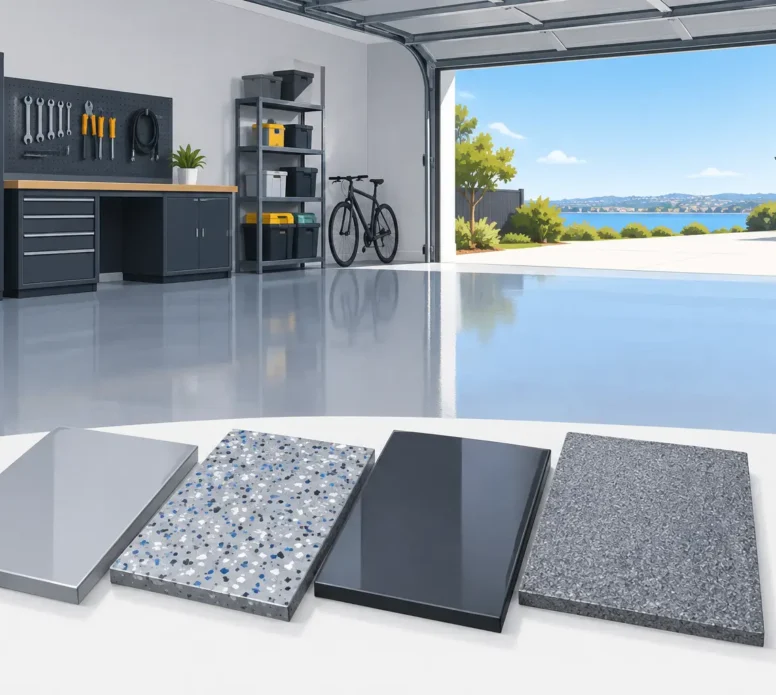
A garage floor has a tougher job than most surfaces around the home. It carries vehicles, tyres, tools, oil drips, wet shoes and the occasional dropped spanner. So, when homeowners ask which coating suits garage floors, the best answer is not simply “epoxy”. The right choice depends on the concrete itself, how the garage is used, moisture levels and the finish you want to live with.
A properly selected coating can make a garage brighter, easier to clean and far more resistant to everyday wear. But even the best product can fail if the slab has not been properly prepared. That is why the decision should start with the condition of the concrete, not just the colour of the flakes.
For many residential garages, a professionally applied epoxy system is the most practical all-round option. It creates a hard, decorative surface with good resistance to tyre marks, minor chemical spills and general abrasion. It is also available in solid colours, decorative flake finishes and slip-resistant textures.
That said, epoxy is not the only worthwhile option. Polyaspartic coatings can suit garages where fast return to service and strong UV resistance matter. Polyurethane topcoats have a role in systems needing extra flexibility and scratch resistance. A penetrating concrete sealer may be enough for a workshop or storage area where the aim is simple dust control and stain reduction rather than a fully finished floor.
The key is matching the coating system to the floor and the way you use the space. A garage used mainly for parking a family car has different needs from a home workshop, a strata parking area or a commercial storeroom.
Epoxy is a two-part coating that cures into a hard, bonded film over prepared concrete. It is popular for good reason: it provides a clean, finished look while giving the slab a meaningful layer of protection.
For a typical home garage, epoxy can handle vehicle traffic, household chemicals and regular cleaning very well. Decorative flakes are especially useful because they soften the appearance of dust and small marks, while also adding texture underfoot. A light-to-mid-tone flake blend can make a dim garage feel much more usable without showing every tyre track.
Epoxy does have trade-offs. It needs careful preparation and appropriate curing conditions. Concrete must be clean, sound and dry enough for the system being applied. If moisture is rising through the slab, or old coatings and contaminants have not been removed, epoxy may lose adhesion and peel. A quality job involves mechanical grinding or other suitable surface preparation, crack treatment where needed, and a moisture assessment before coating begins.
Epoxy can also yellow over time where it receives strong sunlight. This is less noticeable in enclosed garages, but it matters near open doors, carports or areas with large windows. In those cases, a UV-stable topcoat may be part of the recommended system.
Epoxy suits homeowners who want a durable, easy-clean floor with a polished appearance and plenty of design flexibility. It is particularly well suited to enclosed garages, home workshops and multipurpose spaces that need to look neat as well as work hard.
Polyaspartic coatings are often considered when a faster cure is needed. Depending on the system and conditions, they can allow a quicker return to service than traditional epoxy. This can be valuable when the garage cannot be out of action for long.
They also generally offer better UV stability than epoxy, helping the surface hold its colour in areas exposed to sunlight. For garages that open directly to the driveway, or spaces that double as entertaining or hobby areas, this can be a worthwhile benefit.
However, fast curing is not automatically better. Polyaspartic products can be less forgiving during application, particularly in warm or humid conditions. They need an experienced installer who can manage preparation, mixing and application timing correctly. The concrete still needs the same attention to cleanliness, profile and moisture. A fast-cure coating over a poorly prepared slab is still likely to fail.
For coastal properties around Coffs Harbour, humidity and weather conditions deserve proper consideration. Product selection and scheduling should account for the site rather than treating every garage as the same job.
Polyurethane is commonly used as a topcoat within a broader floor coating system rather than as the main build coat. It can offer good abrasion resistance, some flexibility and better protection against UV exposure than many epoxies.
This makes it useful where a floor needs extra protection from scratches, sunlight or minor movement in the slab. It may be applied over epoxy to improve long-term performance and finish retention.
On its own, polyurethane is not always the first choice for a standard garage floor because it generally does not build thickness in the same way as an epoxy base system. The best approach is often a compatible system chosen as a whole, rather than selecting products one layer at a time.
Not every garage needs a high-build coating. If the concrete is in reasonable condition and the goal is simply to reduce dusting, make cleaning easier and limit absorption of spills, a penetrating sealer can be a sensible option.
Penetrating sealers soak into the concrete rather than sitting prominently on top. They preserve a more natural look and can help protect against moisture and staining. They are useful for garages, sheds and storage spaces where appearance is secondary to straightforward protection.
The limitation is that sealers do not deliver the same finished appearance or chemical resistance as epoxy or polyaspartic coatings. They will not hide patchy concrete, cover old stains or create a decorative flake surface. For owners wanting their garage to feel like a clean extension of the home, a full coating system is usually the better fit.
A garage coating is only as sound as the surface beneath it. Before choosing a system, inspect the slab for cracking, soft or dusty areas, previous paint, oil contamination and signs of moisture. White powdery deposits, persistent dampness or peeling old paint can point to problems that need attention before any new coating is applied.
Hairline cracks can often be repaired as part of preparation, but active movement cracks may need a more considered solution. Likewise, oil that has soaked deeply into old concrete requires thorough treatment. Simply painting over it may look acceptable at first, then lift under hot tyres or regular traffic.
Hot tyre pickup is another common concern. After a drive, tyres can be warm and may stress a weakly bonded coating, especially when a car is parked in the same spot day after day. Proper grinding, the right primer and a coating system suited to vehicle traffic are the best defences against this problem.
Gloss finishes can look sharp and reflect light well, but they may show dirt, scuffs and water marks more readily. Decorative flakes offer a more forgiving finish for busy households. They also help break up the visual expanse of a large floor and can be finished with a suitable non-slip texture.
Slip resistance needs balance. A very smooth surface can become slippery when wet, while an overly aggressive texture can make sweeping and mopping difficult. Garages that see wet vehicles, pool gear or frequent foot traffic benefit from a carefully chosen additive rather than assuming that more texture is always better.
Colour also matters. Very pale floors brighten a dark garage but can show workshop grime. Very dark floors hide some marks but may make enclosed spaces feel smaller. Mid-toned grey and natural flake blends are often practical choices because they suit vehicles, walls and storage systems without demanding constant cleaning.
The difference between a floor that lasts and one that disappoints is usually found in the preparation. The slab needs to be assessed, repaired, cleaned and mechanically prepared to create the right profile for adhesion. Dust must be managed carefully, edges detailed properly and cure times respected before vehicles return.
At Harbour Painting Solutions, that attention to preparation is central to how we approach surface restoration. A clear assessment before work begins helps ensure the chosen system suits the condition of the concrete and the way the garage will actually be used.
A garage floor does not need to be flashy to be a valuable upgrade. Choose a coating that suits the slab, the sunlight, the traffic and your daily routine, then give preparation the same priority as the final finish. That is how a garage floor stays easier to clean, safer underfoot and better looking for years to come.